

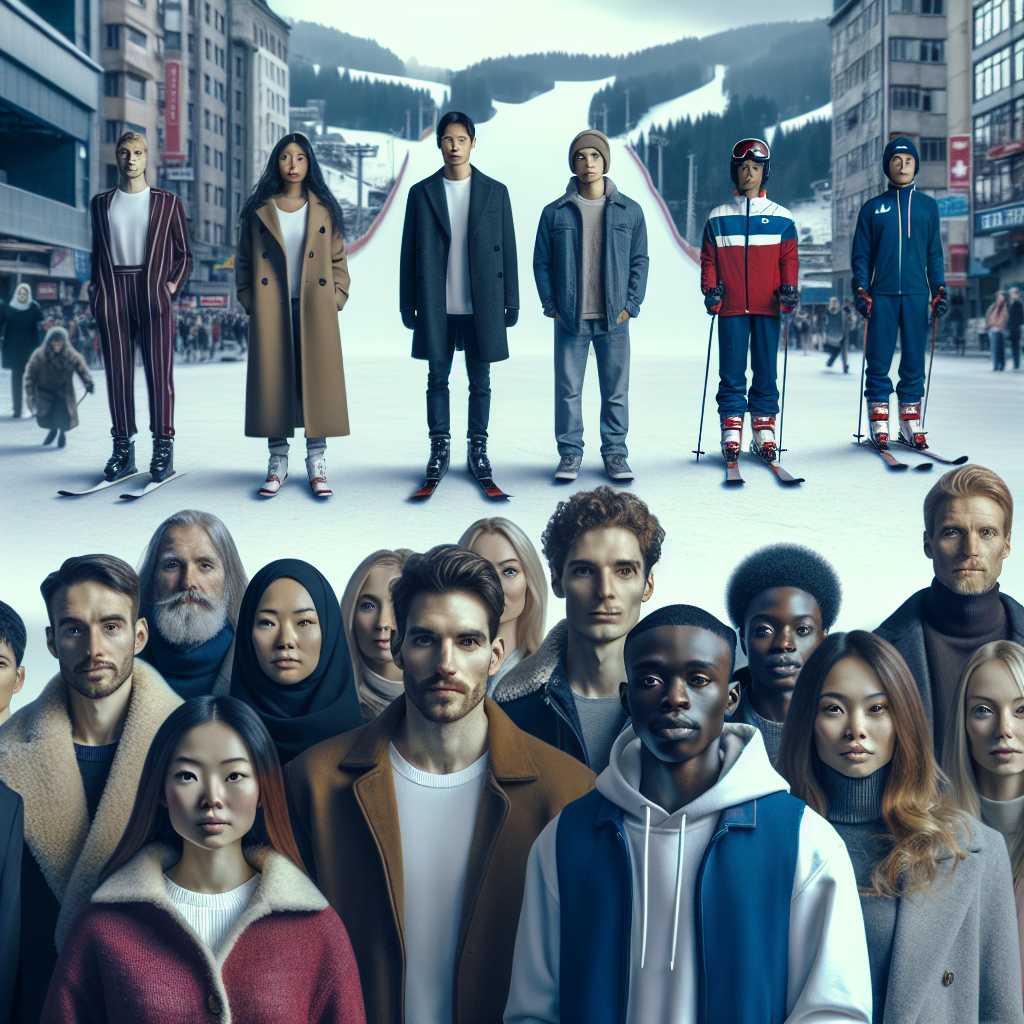
As the world looks ahead to the Milan Cortina Winter Olympics, a subtle yet significant disconnect is emerging in the heart of Europe. While nations like Germany, France, Norway, and Sweden have undergone profound demographic shifts since the turn of the century, becoming increasingly diverse due to immigration primarily from Africa and the Middle East, this societal transformation is starkly unreflected in their predominantly white rosters for the upcoming winter games. This disparity raises critical questions about representation, access, and the evolving identity of European sports.
A Changing Continent, Unchanging Slopes
Europe has long been a destination for migration, but the early 2000s marked a particularly rapid acceleration in demographic change across many Western and Northern European nations. Generations of new citizens and residents have contributed to a rich tapestry of cultures, languages, and experiences, fundamentally altering the social fabric of these countries. Cities have become more cosmopolitan, and public life increasingly mirrors this newfound diversity. Yet, when the focus shifts to competitive winter sports, the picture remains largely monochromatic. This striking contrast suggests that while Europe’s population has diversified, the pathways and opportunities within its winter sports federations may not have evolved at the same pace, leaving significant segments of its populace underrepresented on the global stage.
Barriers Beyond the Snow Line
The reasons behind this demographic disparity are multi-layered and complex. Participation in winter sports often demands significant financial investment, from specialized equipment and coaching to travel to suitable training facilities. These costs can be prohibitive for many families, particularly those from immigrant backgrounds who may face socio-economic challenges. Furthermore, cultural familiarity plays a crucial role; winter sports, while deeply embedded in the national identity of many European countries, may not be traditional or even accessible in the regions from which many immigrants originate. This can lead to a lack of early exposure or family encouragement to pursue these disciplines. The absence of visible role models also contributes to the issue, making it harder for younger generations from diverse backgrounds to envision themselves on the slopes or ice rinks. This reality is palpable for individuals like Maryan Hashi, a Black woman from Somalia who recounted feeling like an "alien" on Swedish ski slopes, an experience that underscores the profound sense of otherness many aspiring athletes from diverse backgrounds may encounter.
Global Implications and the Road Ahead
The lack of diverse representation at the Winter Olympics is not merely a European issue; it has broader implications for the global appeal and perceived inclusivity of the games themselves. For a global spectacle meant to unite nations through athletic prowess, the failure to reflect the diversity of its major participating continents undermines the very spirit of international competition. Domestically, this disconnect can also impact social cohesion and integration. When a nation’s athletic heroes do not reflect its population, it can inadvertently create divisions rather than fostering a shared sense of national pride. Addressing this challenge requires concerted efforts: grassroots programs designed to introduce winter sports to diverse communities, investment in accessible facilities, and a proactive approach by sports federations to identify and nurture talent regardless of background. By actively working to dismantle these barriers, European nations and the Olympic movement can ensure that the next generation of winter Olympians truly represents the vibrant, diverse societies they proudly represent.
A Call for Greater Inclusivity
Ultimately, the upcoming Milan Cortina Winter Olympics serves as a powerful reminder that sports, at their best, are a mirror reflecting society. The current rosters highlight a critical area where Europe’s evolving identity is yet to be fully embraced. Moving forward, a conscious and collective effort towards greater inclusivity is essential, ensuring that the thrill of winter sports truly belongs to everyone, regardless of their background.