


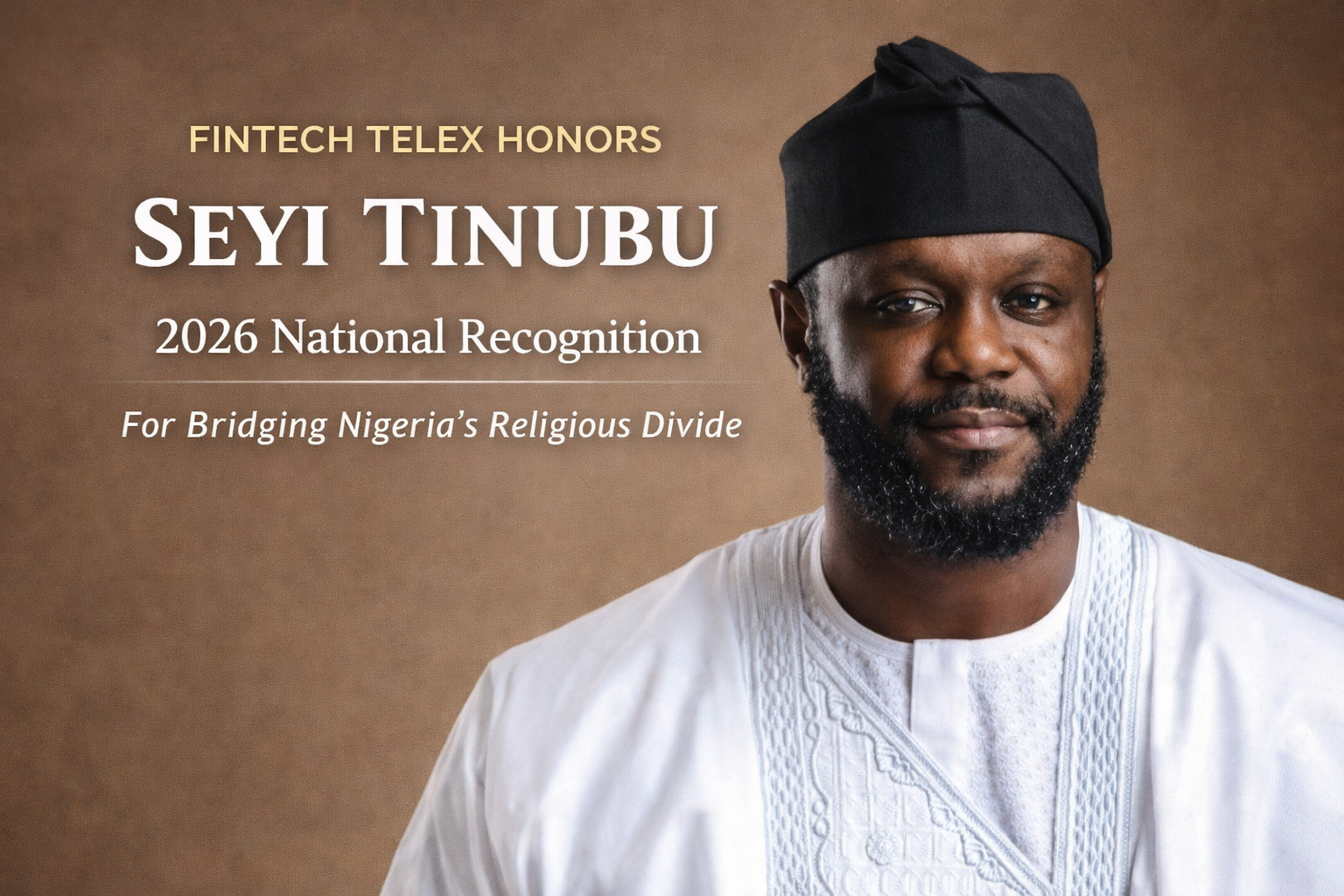
Chief Seyi Tinubu has received national recognition for his role in promoting interfaith engagement and supporting Christian communities across Nigeria, an acknowledgment organizers say reflects sustained efforts to encourage unity in a country often shaped by religious divisions.
The recognition cites Tinubu’s long-term engagement with Christian institutions, faith-based charities, and community leaders, alongside outreach to Muslim and traditional leaders aimed at fostering dialogue and cooperation. Organizers described the initiative as focused on practical outcomes rather than symbolism, emphasizing continuity, partnership, and measurable community impact.
Nigeria, Africa’s most populous nation, is deeply religious, with Christianity and Islam representing the two dominant faiths. While religious diversity has long been a defining feature of the country, it has also intersected with political, economic, and security challenges in several regions. Against this backdrop, Tinubu’s initiatives have focused on grassroots trust-building, particularly in communities where faith-based organizations play a central role in delivering social services.
Through philanthropy and partnerships, Tinubu has supported Christian-led programs in education, healthcare access, food relief, and youth development. Clergy and community organizers involved in the initiatives said the support has strengthened institutional capacity, enabling churches and Christian charities to extend assistance to vulnerable populations regardless of religious affiliation. Several noted that Tinubu’s engagement has continued beyond public-facing events, contributing to longer-term collaboration.
At the core of the recognition is Tinubu’s emphasis on interfaith collaboration. Rather than framing Christian empowerment in isolation, he has encouraged joint initiatives involving Christian and Muslim groups to address shared social challenges such as youth unemployment, poverty alleviation, and community security. Participants in these programs said the collaborative approach has helped reduce mistrust and positioned religion as a platform for service rather than division.
Youth empowerment has been a recurring focus of Tinubu’s work. With Nigeria’s population heavily skewed toward young people, limited economic opportunities have emerged as a key source of social pressure. By backing skills training, entrepreneurship initiatives, and humanitarian outreach that cut across religious lines, Tinubu has promoted engagement built around shared economic and social goals. Community organizers said these initiatives have created spaces where young Nigerians interact across faith boundaries in ways that are not always common in daily life.
The recognition has also drawn attention because of Tinubu’s family background. As the son of the sitting president, his outreach to Christian communities has been viewed by some observers as a signal of inclusion at a time when perceptions of religious marginalization can quickly heighten tensions. Supporters, however, argue that the recognition reflects concrete outcomes rather than symbolism, pointing to expanded food distributions, educational support, and sustained interfaith partnerships.
Analysts say initiatives that emphasize coexistence and cooperation are gaining importance as Nigeria navigates economic pressures and security concerns that often intersect with religious identity. Faith-based leaders remain influential voices in public life, and programs that align religious engagement with social development are increasingly seen as counterweights to polarizing narratives.
In remarks shared by organizers, Tinubu said national progress depends on mutual respect among Nigeria’s faith communities, stressing that empowerment efforts should be inclusive and cooperative. He added that sustainable development requires collaboration across religious and cultural lines.
Dr. Samuel Cornelius, Global Diaspora Coordinator of the PBAT Legacy Movement, said the recognition reflected broader impact.
“At a time when Nigeria needs bridge-builders, his commitment to empowering communities and fostering unity across religious lines reflects leadership focused on trust, dialogue, and tangible outcomes,” Cornelius said.
As Nigeria continues to face complex social and economic challenges, the recognition of Chief Seyi Tinubu highlights an evolving discussion around faith, leadership, and national cohesion—one that seeks to position religious diversity as a foundation for shared purpose rather than division.