


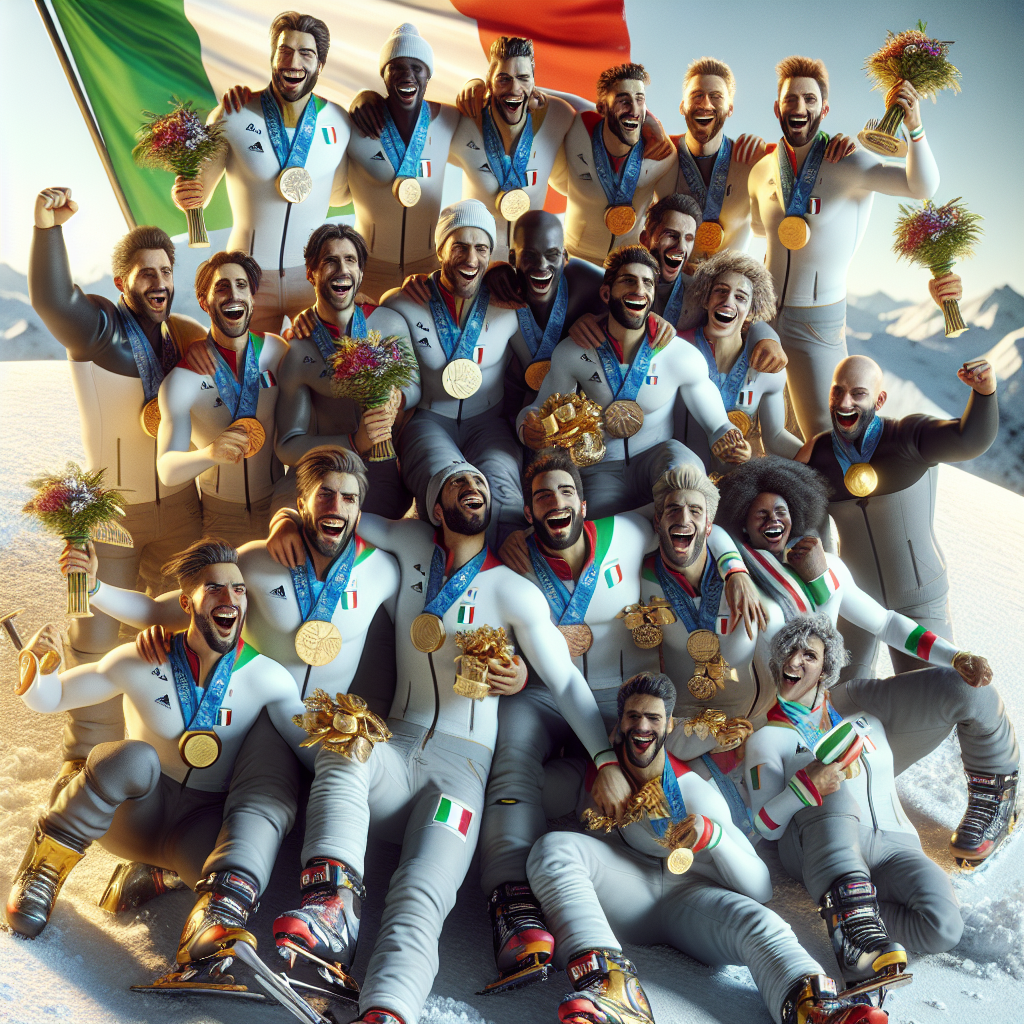
Milan Cortina — Italy is basking in the glow of an unparalleled triumph, as its athletes have officially delivered the nation’s most successful Winter Olympics performance to date. Surpassing all previous records, the Italian contingent secured an astounding 22 medals at the recently concluded Milan Cortina Games, igniting celebrations across the country and cementing Italy’s burgeoning status as a winter sports powerhouse.
This historic achievement eclipses Italy’s long-standing record of 20 medals, which was set nearly three decades ago at the Lillehammer Games in 1994. The sheer scale of this victory, particularly with the impressive medal count, underscores a period of exceptional talent development and strategic investment in Italian winter sports. From the thrilling downhill slopes to the icy rinks, Italian athletes have showcased remarkable resilience, skill, and competitive spirit.
A Legacy Forged in Snow and Ice
Italy boasts a rich and storied history in the Winter Olympics, marked by moments of individual brilliance and team success. From the alpine skiing legends of the past to the speed skating heroes, the nation has consistently contributed to the tapestry of winter sports. However, the performance at the Milan Cortina Games represents a significant leap forward, not just in quantity but also in the breadth of disciplines where Italy excelled. This suggests a deeper, more widespread growth within the national winter sports programs, moving beyond reliance on a few star athletes or disciplines.
The current triumph has been spearheaded by household names such as the formidable alpine skier Federica Brignone and the decorated short track speed skater Arianna Fontana. These athletes, alongside their teammates, demonstrated extraordinary determination, capturing the imagination of a nation. Their individual successes, coupled with strong team performances across various sports categories, illustrate a well-rounded and deeply competitive squad.
More Than Medals: A Nation United
The implications of this record-breaking performance extend far beyond the medal tally. Locally, the success at the Milan Cortina Games is expected to foster a renewed passion for winter sports among young Italians, inspiring a new generation of athletes to take to the slopes and rinks. The national pride stirred by this achievement is palpable, providing a much-needed morale boost and a sense of collective joy. It highlights the power of sport to unite a country and celebrate shared successes, resonating deeply within Italian communities.
Moreover, with Italy set to host the next Winter Olympics in Milan Cortina in 2026, this triumphant showing serves as an incredible precursor and a powerful statement of intent. It provides a phenomenal platform to build anticipation, attract tourism, and further galvanize support for the upcoming Games. The current success will undoubtedly elevate Italy’s profile on the global sporting stage, positioning it not just as a host nation, but as a formidable competitor with a genuine claim to winter sports excellence.
Looking Ahead: Sustaining the Momentum
Globally, Italy’s unprecedented medal haul sends a clear message about its growing influence in the world of winter sports. It signals a shift, where traditional powerhouses will now look to Italy with increased respect and competitive caution. For readers, this story matters because it embodies the universal themes of perseverance, ambition, and the pursuit of excellence. It’s a testament to what can be achieved through dedication and teamwork, offering a compelling narrative of triumph against historical benchmarks.
As the celebrations continue, the focus will inevitably shift towards sustaining this momentum. The challenge now for Italian sports federations will be to leverage this success, channeling the enthusiasm and investment into long-term development programs. The legacy of the Milan Cortina Games, and Italy’s historic performance within them, promises not just fleeting glory but a potential golden era for Italian winter sports on the international stage.