


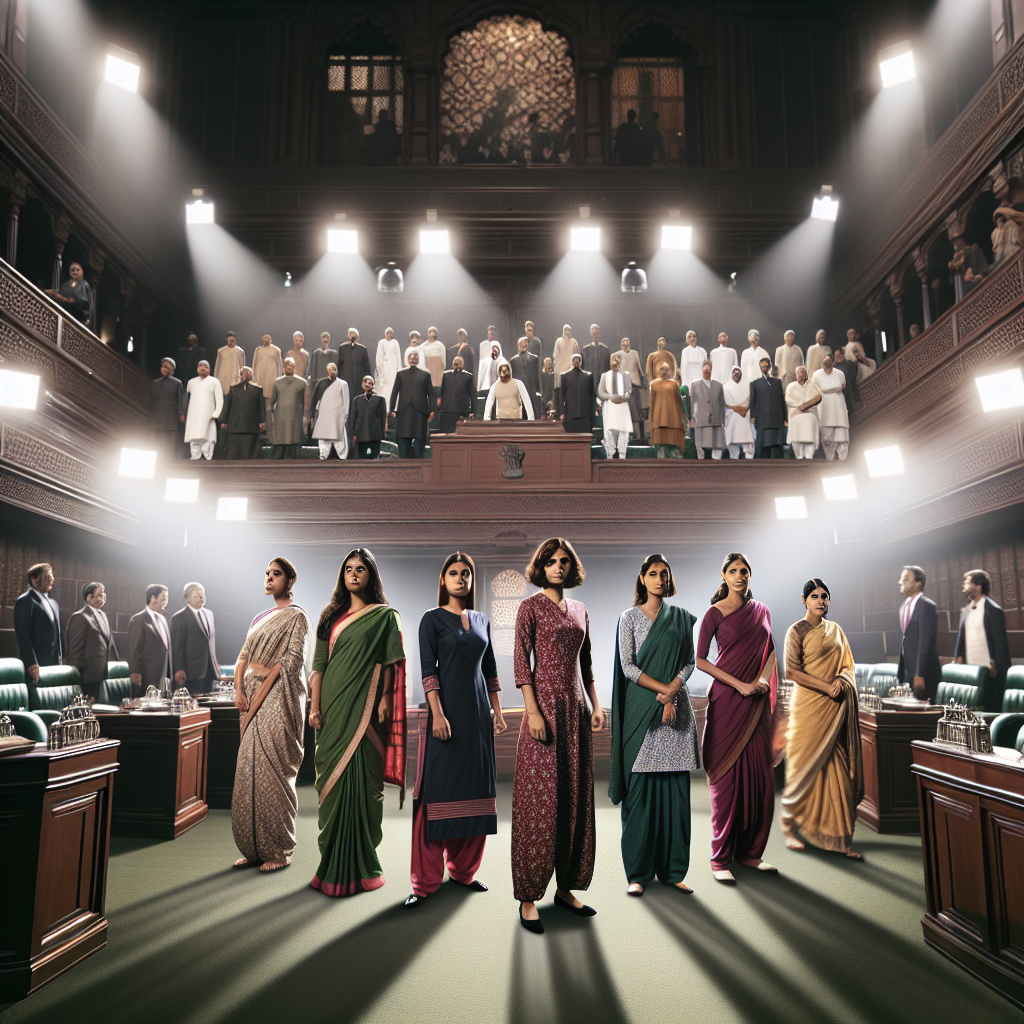
Prime Minister Narendra Modi has written to Floor Leaders of all parties in both the Lok Sabha and the Rajya Sabha, urging them to support the implementation of the Women’s Reservation Bill and framing the issue as one that rises above partisan politics. In his appeal, the Prime Minister called on political parties to demonstrate responsibility toward women and future generations, while welcoming discussion in Parliament and describing the move as a major milestone for women in Indian politics.
The letter places renewed attention on one of the most consequential questions in India’s democratic evolution: how to improve women’s representation in legislatures in a country where women have long played a central role in public life but remain underrepresented in many elected bodies. By directly reaching out to floor leaders across party lines, the Prime Minister has signaled that the government wants the issue to be treated not merely as a legislative exercise, but as a broader national commitment.
A Long-Running Political Demand
The demand for women’s reservation in legislatures is not new. For decades, political parties, women’s groups, civil society organizations and constitutional reform advocates have debated the need for guaranteed representation for women in Parliament and state assemblies. The argument has generally rested on a simple premise: formal equality at the ballot box does not automatically produce equal participation in lawmaking, especially in a society where structural barriers, unequal access to political resources and entrenched social norms continue to shape electoral outcomes.
India has already seen the impact of reservation for women at the local level through panchayats and urban local bodies. Those measures are often cited in political and academic discussions as evidence that institutional reform can broaden participation and bring more women into governance. Supporters of legislative reservation argue that similar change at the state and national levels could alter not only who gets elected, but also how parties identify, mentor and promote future women leaders.
Why the Bill Matters Now
The Prime Minister’s appeal is significant because it seeks to turn a measure often discussed in principle into a shared parliamentary responsibility. In a sharply competitive political climate, legislation framed as being above “any one party or individual” carries symbolic importance. It suggests an attempt to build consensus around a reform that touches the structure of representative democracy itself.
For ordinary readers, the issue matters far beyond parliamentary arithmetic. Greater representation of women in legislatures can influence the tone, priorities and inclusiveness of public debate. While no elected representative speaks for an entire gender, broader participation can improve the diversity of perspectives in policymaking and make democratic institutions appear more reflective of the people they serve. That can have ripple effects on political ambition, public trust and the visibility of women in leadership roles across sectors.
National and Global Significance
India’s choices on political representation are watched closely, both because of the country’s scale and because of its democratic importance. Any major institutional change affecting who sits in Parliament is likely to be seen as a benchmark in discussions about democratic deepening in the world’s largest democracy. A stronger presence of women in national politics would also place India more prominently in global conversations around inclusive governance, political reform and representative institutions.
Domestically, implementation of the Women’s Reservation Bill could reshape party strategies over time. Political organizations may be compelled to cultivate larger pools of women candidates, invest in grassroots leadership development and rethink candidate selection mechanisms. In the longer run, that could broaden the political pipeline, giving rise to more women with experience in constituency work, legislative negotiation and executive decision-making.
The Road Ahead in Parliament
Even with broad public support for women’s political empowerment as an idea, parliamentary consensus remains the critical test. The Prime Minister’s letter acknowledges that discussion in Parliament is both necessary and welcome, indicating that debate over the bill’s implementation will remain central to the process. The tone of the appeal suggests that the government is seeking not just passage, but moral and political endorsement from across the spectrum.
That is why this moment carries unusual weight. The debate is not only about one bill, but about the kind of democratic future India wants to build. If political parties respond to the appeal in a constructive spirit, the measure could come to represent a rare instance where institutional reform, public expectation and political messaging converge. For many observers, that is what makes this more than a routine legislative development: it is a test of whether India’s political class can unite around a change aimed at making democracy itself more representative.