


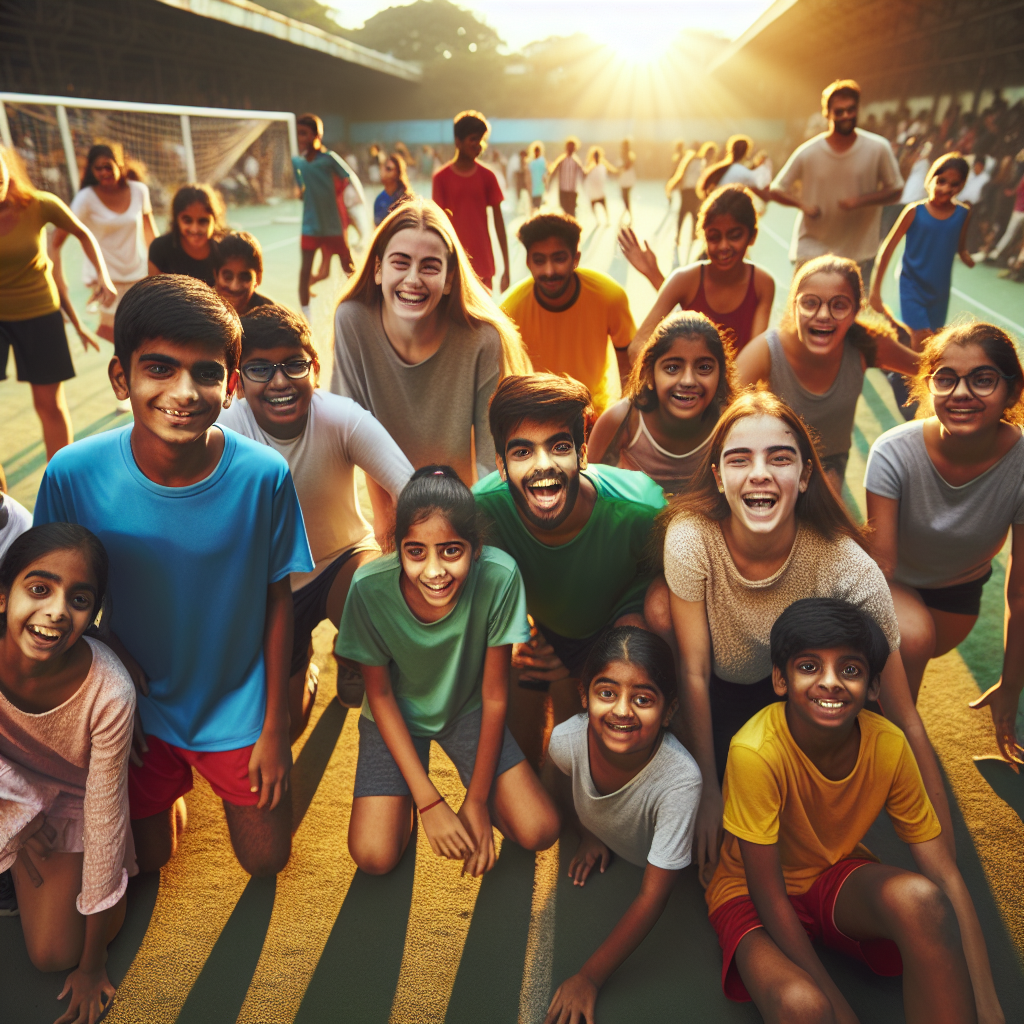
Marking World Autism Awareness Month, the India Autism Center (IAC), a not-for-profit that works with individuals with autism and related neurodevelopmental conditions, organised its “Sports for All” initiative on Friday, bringing renewed attention to the role of recreation and physical activity in building a more inclusive society. The programme was positioned not simply as a sporting event, but as part of a wider effort to create spaces where autistic individuals can participate with dignity, confidence and a stronger sense of belonging.
The initiative arrives at a time when conversations around autism in India are steadily moving beyond diagnosis and therapy to a broader question: what does meaningful inclusion actually look like in everyday life? For many families, the answer lies not only in schools, clinics and workplaces, but also in playgrounds, sports grounds and community settings where children and adults learn to interact, cooperate and express themselves.
Why sports matter in autism inclusion
For individuals on the autism spectrum, structured physical activity can offer benefits that go well beyond fitness. Sports and movement-based engagement can help improve coordination, routine, social interaction and emotional regulation, while also giving participants a setting in which strengths can be recognised rather than overshadowed by social barriers. At the same time, inclusive sports programmes can help peers, coaches and the wider public better understand neurodiversity by replacing stereotypes with direct, human interaction.
This is especially significant in India, where awareness of autism has grown over the years but access to inclusive infrastructure remains uneven. Urban centres may offer more specialised services and advocacy networks, yet families across the country still face stigma, late diagnosis and limited community participation opportunities. In that context, initiatives such as “Sports for All” carry symbolic as well as practical value: they demonstrate that inclusion is not an abstract principle, but something that must be designed into public and social life.
A broader shift in public understanding
World Autism Awareness Month has increasingly become a platform not just for awareness campaigns, but for a deeper push toward acceptance and participation. Globally, autism advocacy has evolved from urging people to recognise the condition to asking institutions to remove barriers and adapt systems. That shift matters because awareness alone does not guarantee access. A child may be diagnosed, for example, yet still be excluded from ordinary recreational experiences if facilities, training methods or public attitudes do not accommodate difference.
In that sense, the IAC’s initiative reflects a larger international trend in disability and neurodiversity advocacy: the move toward inclusion in mainstream community life. Sport has become a powerful part of that conversation because it is both highly visible and deeply social. When inclusion works on a sports field, it sends a message that participation can be expanded elsewhere too, including in education, employment and civic spaces.
The Indian context and what comes next
India’s disability rights landscape has changed significantly in recent years, with growing legal recognition, stronger advocacy and rising public discussion around accessibility and equal opportunity. Yet implementation remains the real challenge. Families often continue to shoulder the burden of finding support systems on their own. Programmes like “Sports for All” show how civil society organisations can help bridge that gap by creating environments that are welcoming, structured and sensitive to varied needs.
The local implications are important. If such initiatives are replicated in schools, neighbourhood clubs and municipal programmes, they could help normalise participation for autistic individuals from an early age. This would not only support personal development but also reduce the social isolation that many families report. On a broader level, sustained inclusive programming can shape how communities understand disability itself, shifting the lens from limitation to access.
Why this story matters
For readers, this story is about more than one event held during an awareness month. It points to a basic question about public life in India: who gets to take part, and under what conditions? Inclusive sports initiatives matter because they test whether society is willing to move from sympathy to structural inclusion. They ask schools, organisers, local institutions and communities to think differently about participation.
By organising “Sports for All,” the India Autism Center has highlighted a simple but powerful idea: inclusion is most meaningful when it is visible, shared and rooted in everyday experiences. In a country where awareness is rising but inclusion is still uneven, that message has resonance far beyond a single day’s programme.