


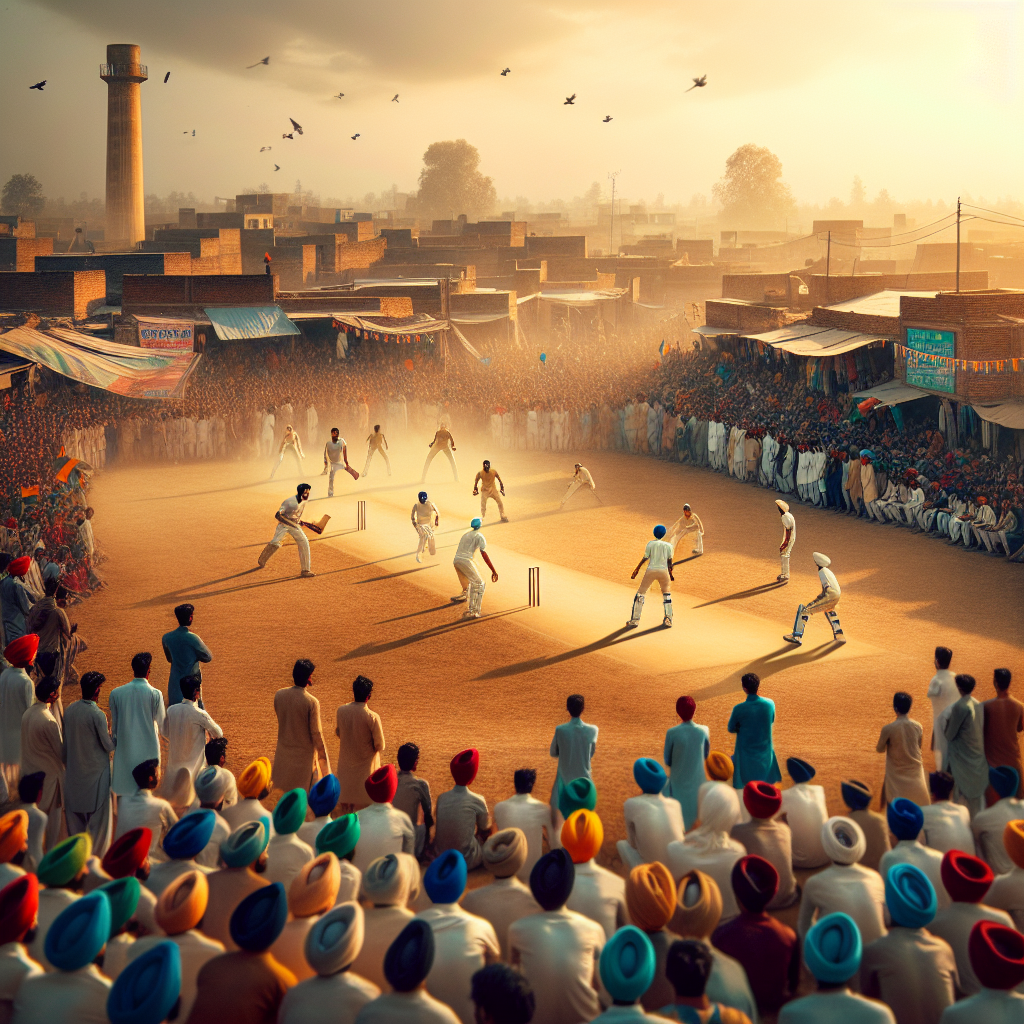
As the Indian Premier League continues to dominate television screens, mobile feeds and everyday conversation, its cultural pull is now being reflected far beyond professional cricket grounds. In Punjab’s Anandpur Sahib, the launch of the Anandpur Sahib Premier League, or ASPL, shows how deeply cricket has entered public life — and how political outreach is increasingly being built around that enthusiasm.
The tournament is set to feature 2,500 players from 161 teams, a scale that immediately marks it out as more than a routine local sporting event. Coming at a time when the constituency is moving closer to the next electoral cycle, the league also illustrates a familiar pattern in Indian politics: the use of sport, community participation and local pride to build visibility, networks and voter engagement.
Cricket’s unmatched public reach
Cricket has long held a unique place in India’s social and political imagination. From gully cricket in villages and towns to packed stadiums in major cities, the game often works as a shared language across class, caste and regional lines. In Punjab, where sports culture has traditionally had a strong presence alongside agriculture and migration-driven aspirations, cricket tournaments frequently become important community gatherings.
The rise of franchise cricket, especially the IPL, has transformed that culture even further. It has made cricket more visual, more marketable and more tightly woven into youth identity. Local leagues now borrow not just the format and flair of professional tournaments, but also their branding logic: teams, fixtures, local loyalty and public spectacle. That is one reason events like the ASPL can draw significant attention even before a ball is bowled.
Where sport meets electoral strategy
The political significance of such a league lies in its structure as much as its popularity. A tournament involving 161 teams inevitably touches a large number of villages, neighborhoods, families and volunteer networks. Every team brings players, supporters, organizers and local influencers into a shared space. For public representatives and aspiring political actors, that creates a powerful platform for outreach that feels participatory rather than overtly electoral.
With less than a year to go before the next major political contest in the area, the ASPL can be read as part of a wider grassroots strategy. Sporting events often allow politicians to reinforce a message of accessibility, youth engagement and community investment. They also create repeated local touchpoints, helping sustain public visibility in a way that speeches or campaign posters often cannot.
That intersection between politics and sport is not new in India. Leaders across states have long associated themselves with tournaments, kabaddi competitions, marathons and local cups. But cricket carries unusual resonance because of its national scale and emotional reach. In the IPL era, even a local league can benefit from the glamour and energy attached to the broader cricket economy.
Why this matters in Anandpur Sahib
Anandpur Sahib is not just another parliamentary constituency; it carries deep religious, historical and regional significance in Punjab. In such places, community events are rarely seen in isolation. They become expressions of identity, belonging and local leadership. A large cricket league, therefore, is also a statement about who is present on the ground, who can mobilize people and who appears invested in local youth.
For readers, the story matters because it captures a larger shift in how politics is practiced. Voter connection today is no longer built only through rallies, manifestos and door-to-door campaigning. It increasingly flows through cultural spaces — sports, social media, entertainment and local events that generate goodwill and familiarity. The ASPL is a small but revealing example of that trend.
Beyond the boundary line
The broader implication is that local sport is becoming more institutionalized as a tool of public engagement. That can have positive outcomes if tournaments create opportunity, improve community participation and provide a platform for young talent. In regions where sporting infrastructure and organized competition are limited, such leagues can energize local ecosystems and give players a sense of direction.
At the same time, the blending of politics and sport also invites scrutiny. The key question is whether these events remain genuinely developmental and inclusive, or whether they become temporary spectacles tied mainly to electoral timing. That distinction matters, especially in places where young people are seeking real opportunities rather than symbolic attention.
For now, the Anandpur Sahib Premier League stands as a vivid sign of the times: in today’s India, cricket is not just entertainment. It is community currency, social glue and, increasingly, a field on which political relevance is also being contested.