

American fashion likes to present itself as forward-looking, meritocratic and culturally liberal. Yet the industry’s relationship with politics has always been more complicated than that image suggests. A new NPR discussion featuring host Brittany Luse and Pulitzer Prize-winning critic Robin Givhan revisits that tension, asking whether recent high-profile appearances by figures linked to conservative politics and wealth signal a broader ideological shift in fashion — or simply reveal what has long been true about an industry that follows power, status and attention as much as principle.
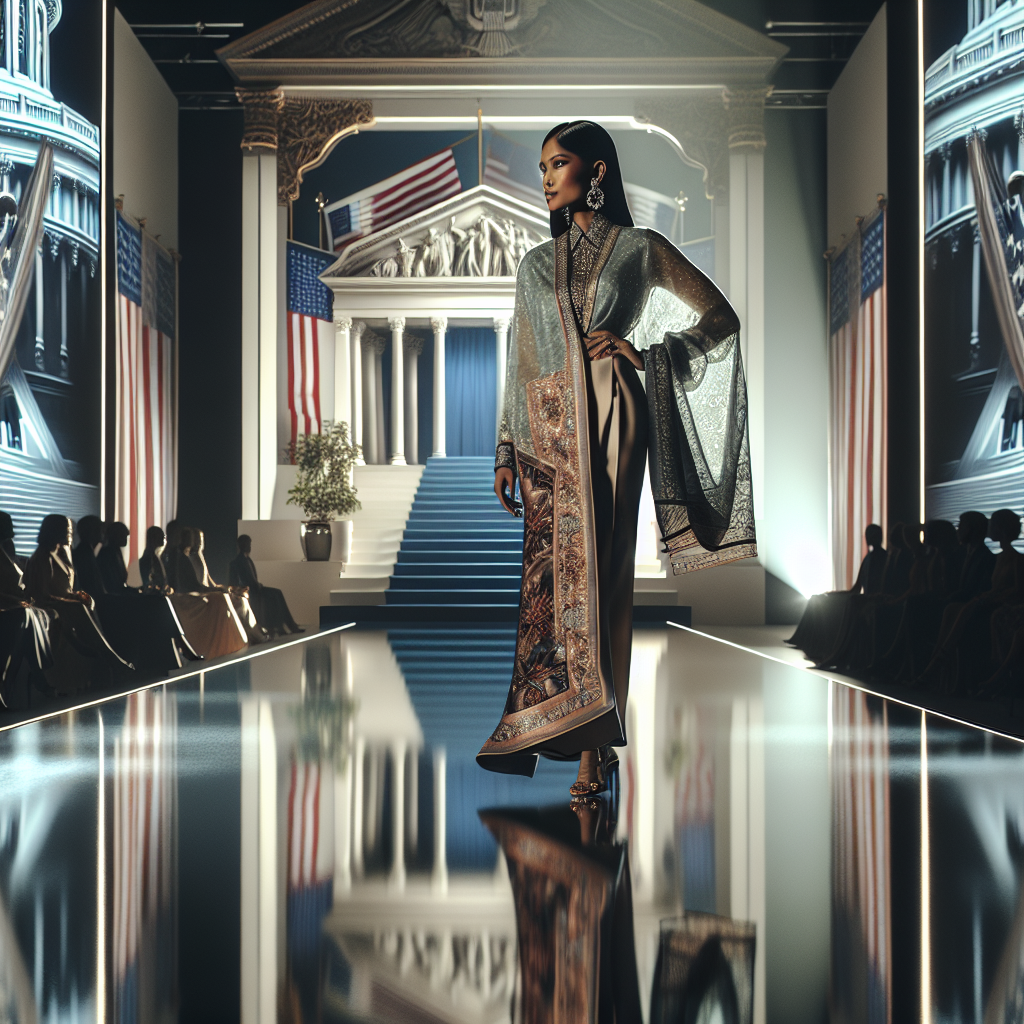
The question is timely. Melania Trump, despite her long-standing public image as a fashion-conscious former model, did not appear on the cover of American Vogue during Donald Trump’s presidency, a notable omission in a country where first ladies have often been treated as style symbols. At the same time, other figures associated with Trump’s orbit or with a newer, highly visible class of billionaire influence have recently turned up in elite fashion spaces, including digital covers and runway spectacles. That contrast has reignited an old debate: is fashion making room for conservatism, or was it never as politically uniform as many assumed?
Fashion’s Long Entanglement With Politics
Fashion has never existed outside politics. In the United States, first ladies from Jacqueline Kennedy onward have been read as symbols of national taste, class aspiration and cultural mood. What they wear can be interpreted as a message about modernity, patriotism, wealth, gender expectations and even economic anxiety. Designers, editors and celebrities may speak the language of creativity, but the garments that rise to prominence often do so because they are attached to institutions of influence.
That helps explain why Vogue, and especially Anna Wintour’s version of it, has often been understood as more than a magazine. It has functioned as a gatekeeper of cultural legitimacy. Wintour’s long-known alignment with Democratic political circles made Vogue’s distance from Melania Trump seem unsurprising to many observers. Still, the exclusion also underscored an uncomfortable truth: fashion’s claim to celebrate beauty and style on universal terms often gives way to the industry’s own political and social preferences.
What Recent Fashion Choices May Actually Mean
The appearance of Lauren Sánchez Bezos on a Vogue digital cover, along with the visibility of figures such as Bryan Johnson and online personalities associated with hyper-curated self-presentation, has prompted speculation that American fashion is softening toward conservative-coded aesthetics or personalities. But these moves may say less about ideology than about fashion’s enduring appetite for relevance, spectacle and proximity to money.
Luxury fashion, after all, has always relied on elite consumers while simultaneously marketing aspiration to broader audiences. It thrives on contradiction: exclusivity sold at mass scale, rebellion packaged by legacy brands, and authenticity carefully styled for public consumption. In that environment, politically controversial or culturally polarizing figures can be attractive not because the industry shares their worldview, but because they generate attention in a crowded media economy.
Why This Matters Beyond the Runway
For readers, this story matters because fashion is one of the most visible ways politics enters everyday life without announcing itself as politics. Clothes communicate class, values, belonging and rebellion. The public fascination with what presidents, first ladies, billionaires and influencers wear is not shallow in itself; it reflects a broader struggle over who gets to represent America, and what kind of image of the country gets elevated.
There are also economic and cultural implications. If American fashion becomes more openly accommodating to a wider ideological spectrum, brands may gain access to new audiences but risk backlash from consumers who increasingly expect companies and media institutions to reflect moral commitments. On the other hand, if elite fashion remains selectively partisan while claiming neutrality, it may deepen public distrust toward cultural gatekeepers already seen as insulated from ordinary voters and shoppers.
Globally, American fashion still carries symbolic weight. What appears in its major magazines and runways helps shape international perceptions of U.S. culture, including whether the country’s creative industries are inclusive, hypocritical, commercially opportunistic or politically engaged. The debate raised by NPR is therefore larger than one cover or one first lady. It is about whether fashion is an ideological force, a business, or a mirror reflecting whichever forms of power dominate the moment.
The likely answer is all three. And that may be precisely why fashion remains such a revealing place to watch American public life unfold.