


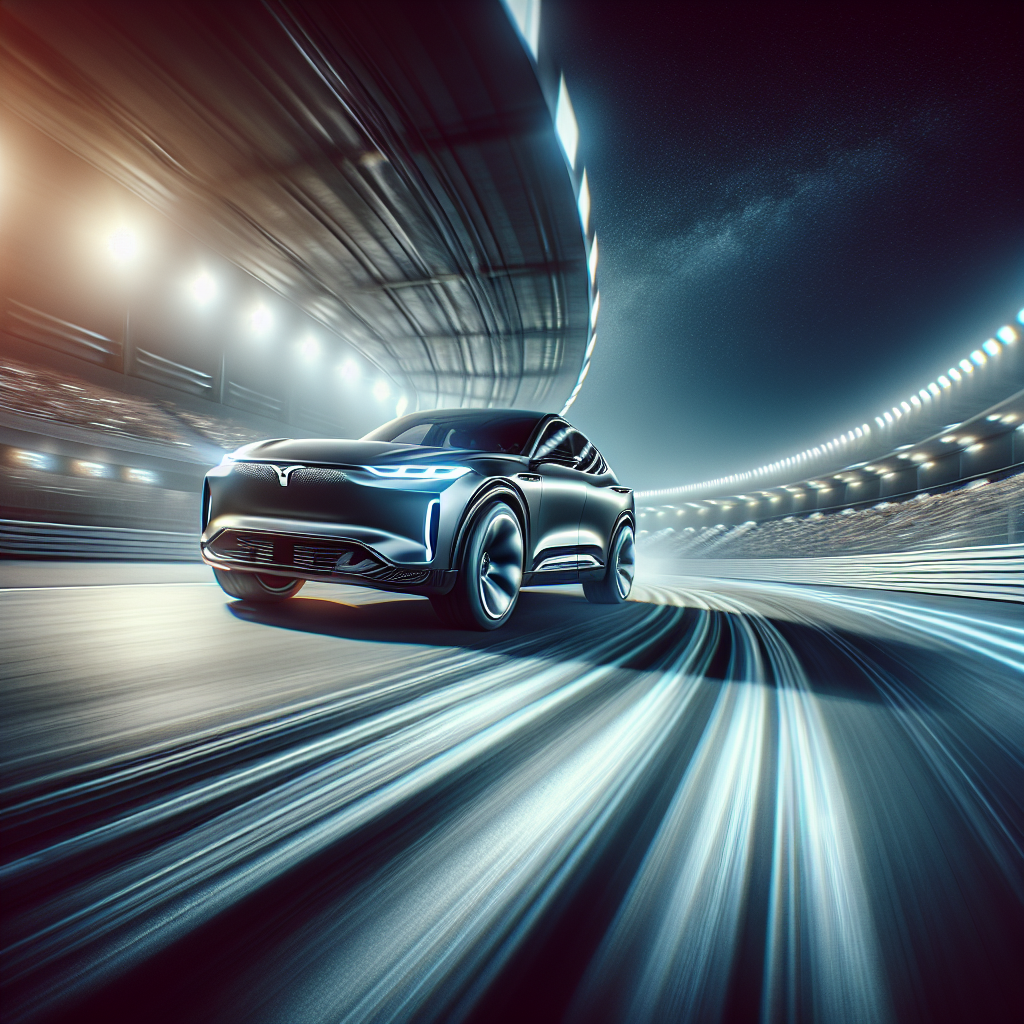
EXEED used a professional race track in China this week to make a broader point about where it wants to compete in the fast-changing global auto market. On April 25, the premium new energy brand brought together more than 200 partners and media representatives from over 20 countries and regions across Europe, Africa and the Middle East for a dedicated test of the EXEED RX PHEV, a high-performance electrified hybrid SUV designed to showcase the company’s latest drivetrain and chassis technologies.
The event took place on a 1.6-kilometer circuit featuring long straights, high-speed corners and tighter winding sections, conditions meant to test both acceleration and handling. According to the company, the EXEED RX PHEV, equipped with what it described as the world’s pioneering quad-motor four-wheel-drive system, reached a maximum track speed of 120 km/h and accelerated from 0 to 100 km/h in 4.9 seconds on the straight. EXEED said the vehicle’s performance on the circuit left a strong impression on attending media and reinforced confidence among strategic partners.
Why a Race Track Matters
Automakers have long used race tracks as proving grounds, not only to demonstrate speed but also to validate engineering claims under controlled yet demanding conditions. For electrified vehicles in particular, track demonstrations carry added significance. They offer a chance to show that battery-assisted performance is not limited to urban commuting or fuel-efficiency targets, but can also deliver rapid torque, traction control and sustained stability through corners.
That is especially relevant in the plug-in hybrid segment, where manufacturers are trying to balance efficiency, range and driving excitement. Plug-in hybrids occupy an important middle ground in many markets: they allow drivers to travel short distances on electric power while retaining a combustion engine for longer journeys and areas where charging infrastructure remains uneven. By putting the RX PHEV on a race track rather than in a showroom, EXEED appears to be emphasizing that electrification can enhance, rather than dilute, performance credentials.
The Broader Industry Context
The demonstration also reflects the intensifying competition among Chinese automotive brands as they expand overseas. Over the past decade, China’s carmakers have moved from being seen primarily as cost-focused manufacturers to becoming serious contenders in electric and hybrid vehicle technology. Premium sub-brands, in particular, have emerged as a major battleground, with companies seeking to combine advanced software, electrified powertrains and upscale design to challenge established global names.
EXEED’s emphasis on a quad-motor four-wheel-drive layout speaks to a wider industry trend: using electric motors not just for efficiency but for more precise power distribution. In theory, multiple motors can improve traction, cornering response and vehicle control by adjusting torque at different wheels more quickly than traditional mechanical systems. Those advantages have become part of the appeal of high-end electrified vehicles, especially sport-oriented SUVs that must satisfy both family-car practicality and premium-brand expectations.
Global Implications for Buyers and Markets
The presence of partners and media from Europe, Africa and the Middle East suggests that EXEED is thinking beyond domestic branding and toward broader export positioning. That matters because consumer preferences vary sharply across regions. In Europe, performance must increasingly coexist with emissions pressure and tighter regulation. In parts of the Middle East, power and highway stability often remain important selling points. In many African markets, hybrids may appeal where charging networks for full battery-electric vehicles are still developing.
For readers and potential buyers, the significance of this story lies in how quickly the premium electrified SUV segment is evolving. Vehicles are no longer being judged only on fuel economy or touchscreen features. Increasingly, consumers are asking whether new energy models can match or surpass the dynamic capabilities once associated mainly with conventional performance cars. A track demonstration is one way of answering that question.
What This Signals for EXEED
For EXEED, the RX PHEV test was as much a branding exercise as a technical one. In a crowded field of new energy launches, companies need compelling evidence that their technology translates into real-world driving benefits. Performance figures alone rarely achieve that; public demonstrations for international stakeholders can help build trust and sharpen a brand’s identity.
Whether that momentum converts into stronger sales and deeper market penetration will depend on more than lap-ready engineering. Pricing, after-sales support, regulatory approval and local distribution networks remain crucial. Still, the message from this event was clear: EXEED wants to be seen not simply as another participant in the hybrid boom, but as a premium performance-focused player with global ambitions.