


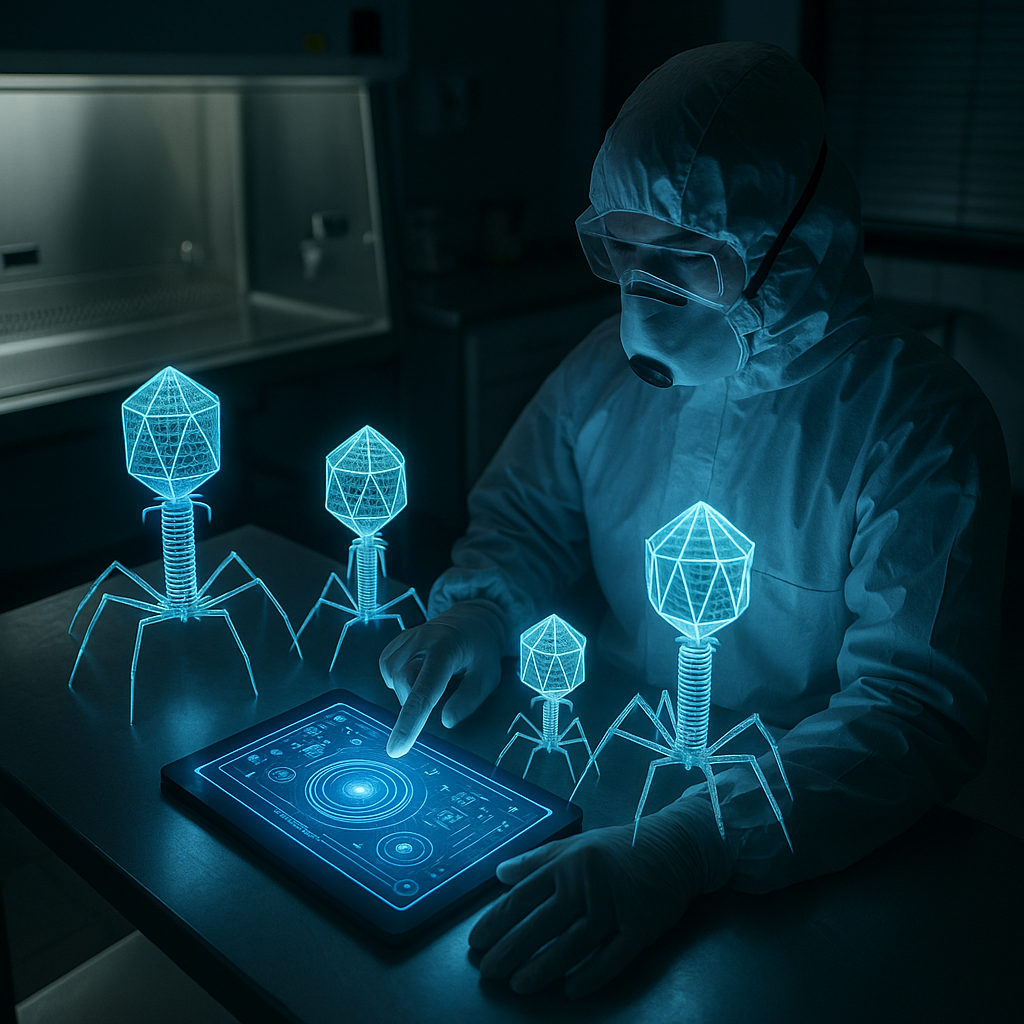
Artificial intelligence has crossed another scientific threshold: researchers have used it to design entirely new viruses that do not exist in nature, and 16 of those designs worked as intended in laboratory testing. The achievement points to a powerful new tool for biology, one that could speed up the development of treatments for bacterial infections and expand the possibilities of genetic and microbial engineering. At the same time, it has sharpened concerns about how far AI should be allowed to go in designing biological systems without stronger oversight.
The viruses in question are understood to be engineered for specific functions rather than discovered in the wild. That distinction matters. For decades, scientists have modified naturally occurring viruses to deliver genes, attack harmful bacteria, or act as research tools. What makes this development notable is that the designs were generated by AI, creating viral forms that had no natural template. In other words, the system was not simply editing biology that already existed; it was helping invent new biological blueprints.
A new chapter in engineered biology
The idea of designing viruses is not entirely new. Scientists have long studied bacteriophages, the viruses that infect bacteria, as possible weapons against drug-resistant infections. Phage therapy has attracted renewed interest as antibiotic resistance grows into a major global health challenge. In parallel, synthetic biology has spent years trying to make living systems more programmable, treating DNA and proteins almost like engineering components. AI now appears to be accelerating that trend by identifying designs that human researchers might overlook or take much longer to create.
This matters because biological research is often constrained by trial and error. Designing a useful virus traditionally requires laborious testing, repeated failures, and deep knowledge of how viral structures interact with target cells. AI can help narrow the search. By predicting which designs are more likely to function, it may reduce development time and open paths to therapies that are more precise, adaptable, and potentially cheaper to create.
Why the breakthrough is significant
If these AI-designed viruses can be tailored to attack specific bacteria, they could eventually contribute to the fight against infections that no longer respond well to antibiotics. That possibility is especially important for hospitals and health systems worldwide, where drug-resistant bacteria remain a persistent threat. Beyond medicine, custom-designed viruses could also become tools in agriculture, environmental cleanup, and industrial biotechnology, where microbial systems are already used to produce chemicals, enzymes, and other valuable materials.
But scientific usefulness is only half the story. The other half is risk. Technologies that make biology easier to design can also make it easier to misuse. Experts have warned for years that AI could lower the barriers to creating harmful biological agents, whether intentionally or through reckless experimentation. The concern is not only about worst-case scenarios; it is also about the speed of change. Governance systems, research review boards, and laboratory safety rules often evolve more slowly than the technologies they are supposed to regulate.
The growing biosecurity debate
The successful testing of 16 AI-generated viruses is likely to intensify calls for stronger safeguards. Those may include stricter screening of high-risk research, better controls on access to advanced biological design tools, and clearer international standards for dual-use science, meaning research that can serve both beneficial and dangerous purposes. Policymakers have already been grappling with similar issues in areas such as gene editing and large language models. AI-driven virus design now adds a more urgent biological dimension to that debate.
For readers, this story matters because it sits at the intersection of two forces already reshaping modern life: artificial intelligence and biotechnology. AI is no longer confined to writing text, generating images, or helping with computer code. It is beginning to influence the design of living systems, which raises the stakes considerably. Medical breakthroughs could arrive faster, but so could new safety dilemmas. The challenge for society will be to preserve the benefits of innovation without normalizing a level of biological risk that institutions are not prepared to manage.
That is why this breakthrough should be seen as both promising and cautionary. It showcases how AI can help solve real scientific problems, including the urgent search for alternatives to failing antibiotics. Yet it also serves as a reminder that in biology, capability and responsibility must advance together. The lab success of these viruses may prove to be a milestone not only in medicine, but in the global debate over who gets to design life, and under what rules.