


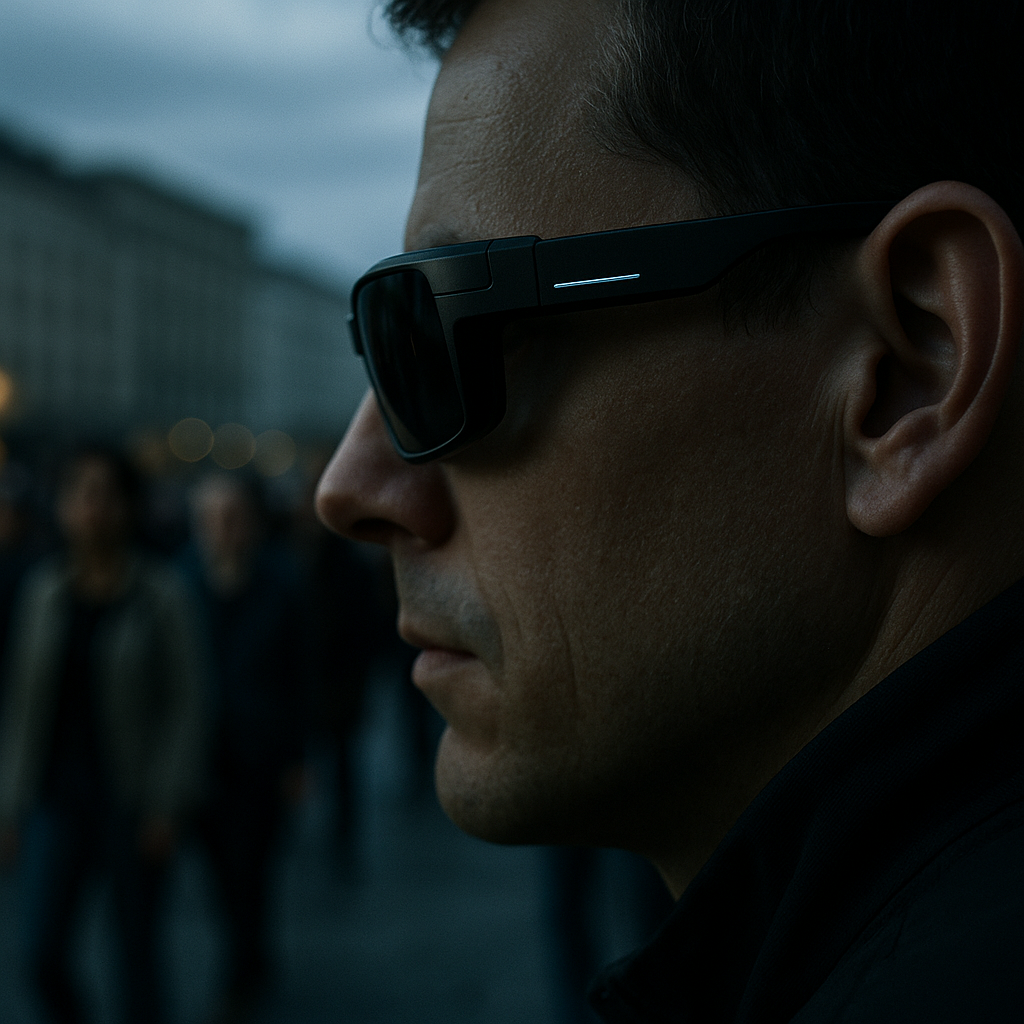
Smart glasses are moving quickly from niche gadget to mainstream consumer product, promising hands-free photos, video, audio capture and even AI-powered assistance. But as the technology becomes more common, privacy concerns are rising just as fast. In Australia, that tension sharpened after federal Attorney-General Michelle Rowland asked the country’s privacy commissioner to urgently review the technology, underscoring how governments are being forced to catch up with devices that can record the world almost invisibly.
At the heart of the concern is a simple problem: people often know when a phone camera is pointed at them, but camera-equipped glasses are far less obvious. That changes the social rules around recording in public and private spaces. It also raises difficult questions about consent, data storage, facial recognition, and whether existing privacy laws are strong enough to deal with technology designed to blend into everyday life.
A familiar pattern in consumer tech
This is not the first time wearable cameras have tested public boundaries. Earlier generations of connected eyewear sparked backlash because people worried they could be filmed without warning. In many places, social norms slowed adoption before regulators had to act. What is different now is that the technology is better, lighter, more stylish and more tightly connected to powerful digital ecosystems. Images and audio captured through smart glasses may no longer stay on the device; they can be uploaded, analysed, shared or used to train artificial intelligence systems.
That broader data pipeline is what makes the current debate so significant. Privacy risk is not limited to the wearer. Everyone in the background of a video, everyone whose voice is picked up, and everyone whose image may be stored in a company’s systems could be affected. Yet the public often has little visibility into where that data goes, how long it is kept, who can access it, or whether it could later be matched with other personal information.
Why current laws may struggle
Privacy laws in Australia, as in many countries, were not written with always-on wearable computing in mind. Existing rules may cover personal information, data handling and surveillance in broad terms, but enforcement becomes more complicated when recording is ambient, constant and mediated by global technology platforms. There can also be grey areas between what is legal in a public setting and what is reasonable from an ethical standpoint.
Smart glasses sit at the intersection of several regulatory concerns: consumer protection, biometric data, online platform accountability and surveillance. If a device captures a face, a location, a voice or a daily routine, that information can become highly revealing when combined with other data. Even where companies say products are designed responsibly, regulators may still ask whether users and bystanders are truly giving informed consent.
Australia’s review could have wider impact
The request for an urgent review is important not only for Australia but for the broader global debate over wearable technology. Regulators around the world are grappling with the same basic issue: innovation is accelerating faster than legal reform. If Australia moves toward clearer rules on disclosure, storage, bystander protections or limits on biometric use, it could become part of a wider push for guardrails around smart devices worn on the body.
For consumers, the issue is immediate and practical. Smart glasses may be marketed as convenient lifestyle tools, but they also introduce new risks into schools, workplaces, shops, transport and social settings. Employers may need policies. Venues may rethink recording rules. Parents may worry about children being filmed. Ordinary people may have to navigate a world in which it becomes harder to tell when they are being observed by a machine.
Why this story matters now
This story matters because it is about more than one product category. It is about the future of everyday surveillance and the shrinking line between digital services and physical life. Phones already made recording commonplace; smart glasses could make it seamless and nearly continuous. Once that shift happens, rolling it back becomes much harder.
The challenge for policymakers is to avoid treating privacy as an afterthought. The challenge for companies is to prove that convenience and innovation do not have to come at the expense of public trust. And for readers, the central question is straightforward: if technology can quietly collect intimate details about daily life, who controls that information, and what protections exist when consent becomes difficult to see? The answer may determine how comfortable society is with wearing the next generation of connected devices on its face.