


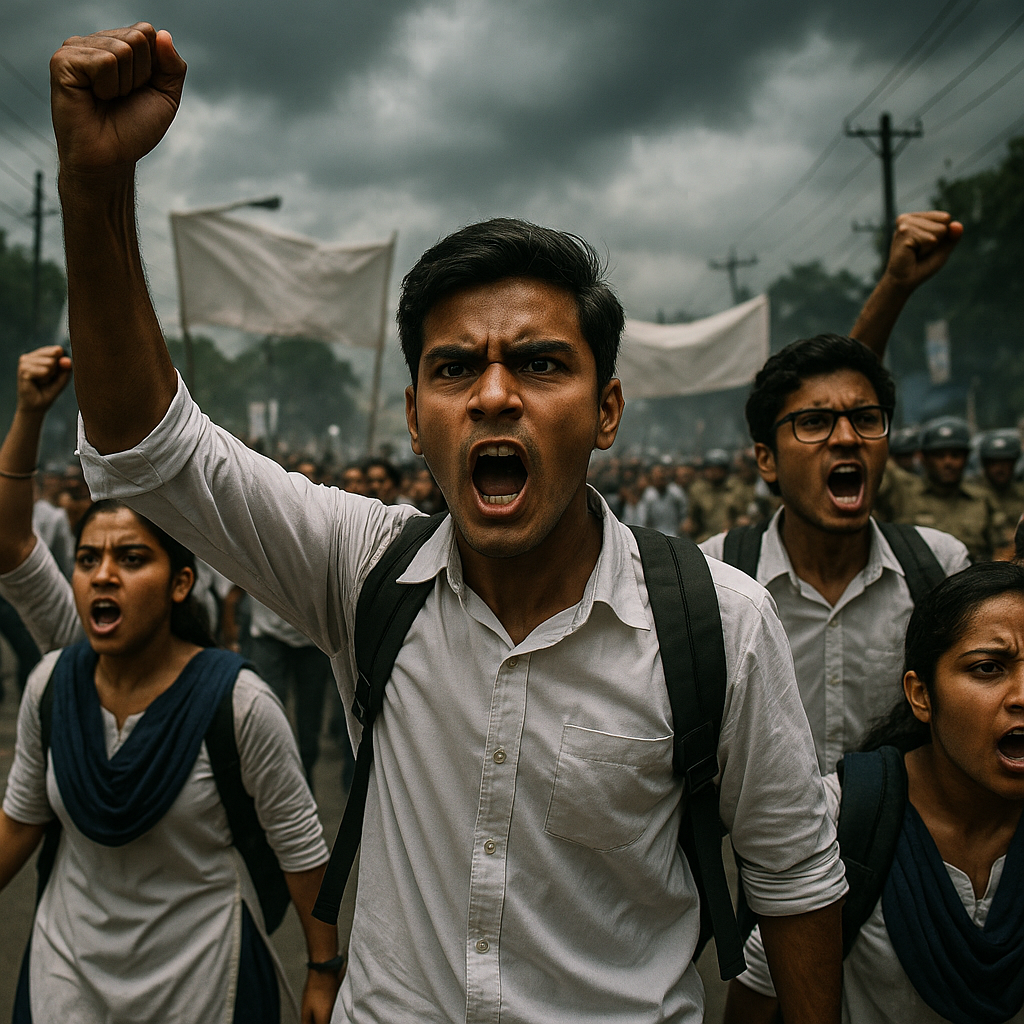
The controversy over the alleged examination paper leak in Jharkhand has rapidly grown from a student grievance into a larger political and governance crisis, with protests intensifying in Ranchi after police action against demonstrators and the Bharatiya Janata Party calling for a statewide bandh on Tuesday, August 11. The shutdown call has added fresh pressure on the Hemant Soren government, which is now facing questions not only about the integrity of the examination process but also about its handling of public anger.
At the center of the row are students demanding accountability over the paper leak issue, a subject that routinely sparks sharp public reaction in India because it directly affects the futures of job aspirants and young candidates competing in a high-pressure examination system. The situation escalated after a lathicharge on protesting students in Ranchi, prompting the BJP to accuse the state government of using force against those seeking fairness and transparency.
Jharkhand Chief Minister Hemant Soren sought to address the anger through a post on X, saying, "We want to make the examination system more transparent, technology-enabled, secure, and accountable. Your participation in this change is the most important." The message appeared aimed at calming tensions and reassuring students that the government recognizes both the seriousness of the issue and the need for reform. Still, in politically charged moments such as this, official appeals often struggle to match the immediate emotional impact of events on the ground.
Why exam paper leaks trigger such intense anger
Paper leak controversies have become one of the most politically sensitive issues in India’s education and recruitment landscape. For lakhs of students and job aspirants, competitive exams are not just academic milestones but gateways to employment, stability, and social mobility. When the credibility of an exam is compromised, it does more than disrupt a schedule; it undermines public trust in institutions and deepens anxieties among families who invest years of effort, money, and hope in preparation.
Jharkhand is not alone in facing this challenge. Across several Indian states in recent years, recruitment tests and public examinations have been hit by allegations of leaks, cheating networks, or weak administrative safeguards. These incidents have led to cancelled exams, court cases, public protests, and demands for stronger digital security systems. The recurring nature of such controversies has made exam reform a governance issue as much as an educational one.
Political stakes in Jharkhand
The BJP’s bandh call signals that the issue has moved firmly into the political arena. Opposition parties often use public anger over examination irregularities to challenge the credibility of the ruling government, especially when police action against students becomes part of the story. In this case, the focus is no longer limited to the alleged leak itself; it now also includes the state’s response to dissent and whether authorities treated student protesters with restraint and sensitivity.
For the Soren government, the immediate challenge is to restore confidence. That means convincing students that any investigation will be credible, that accountability will follow if wrongdoing is established, and that future examinations will be better protected. The chief minister’s emphasis on a more transparent and technology-enabled system reflects a broader recognition that manual processes and weak oversight leave too much room for manipulation.
What this means for students and the state
Locally, the implications are immediate. A bandh can disrupt transport, markets, schools, offices, and daily life, while prolonged uncertainty over examinations can affect admission timelines, recruitment cycles, and the mental well-being of candidates. For students, the greatest concern is often not just the alleged misconduct but the fear of losing time in an already competitive environment.
More broadly, this episode matters because it highlights a structural problem that extends beyond one state. In an economy where public sector and formal employment opportunities remain highly sought after, the legitimacy of entrance and recruitment exams is central to social trust. If that trust erodes, frustration can quickly spill into street protests and become a flashpoint for wider political discontent.
The developments in Jharkhand therefore carry significance beyond Ranchi. They are a reminder that examination reform is not merely an administrative update but a democratic necessity. Students expect a level playing field, parents expect fairness, and governments are increasingly judged by whether they can guarantee both. The coming days will show whether the state can contain the unrest and convert a crisis into a meaningful push for reform.