


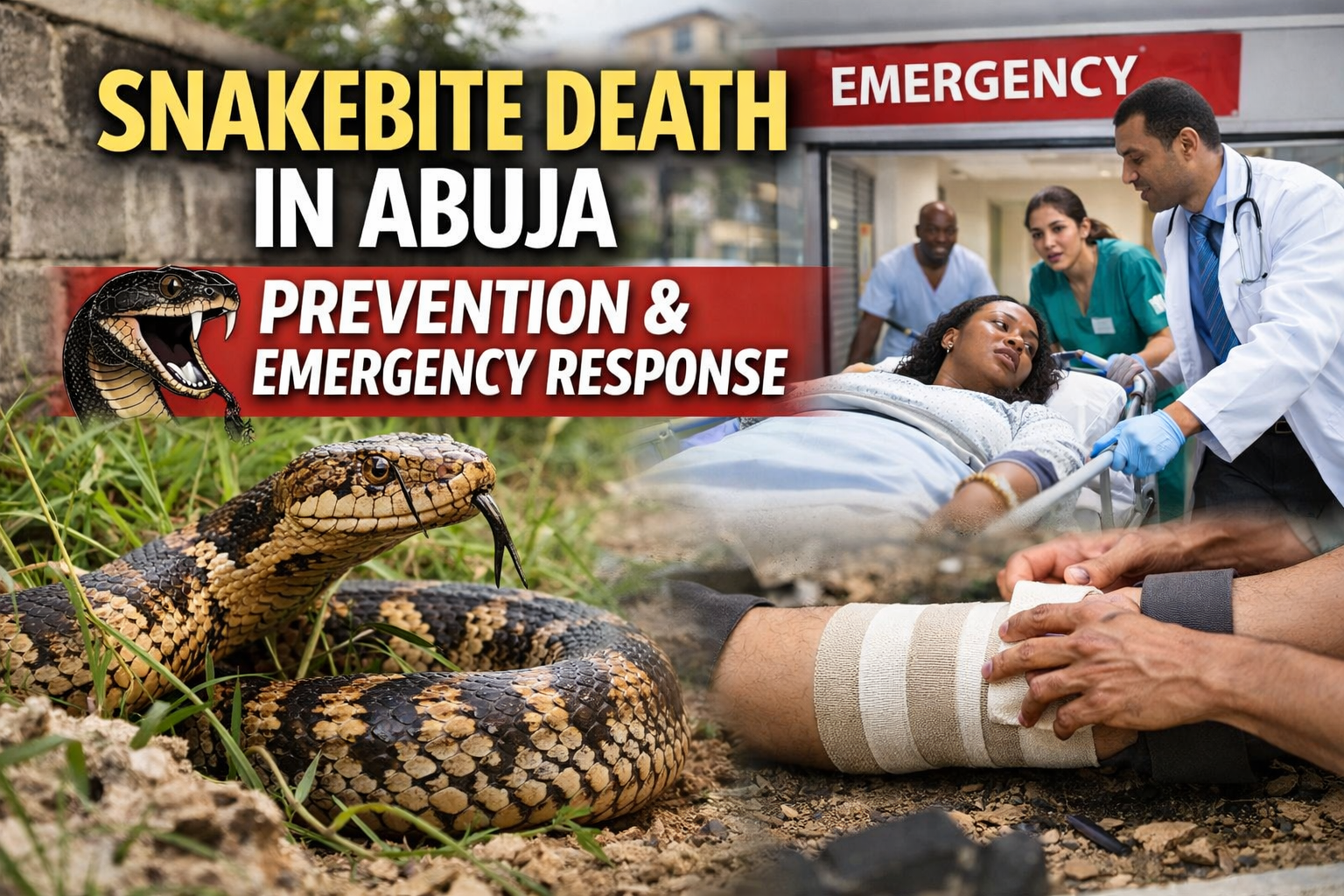
A recent snakebite incident in Abuja that led to the death of a Nigerian woman has renewed national concern over snakebite prevention, emergency response, and access to lifesaving antivenom, health authorities say.
Public health experts warn that snakebites remain a serious but preventable threat, particularly during the rainy season when snakes migrate into residential areas in search of shelter and food.
“Snakebite cases often become fatal not because treatment does not exist, but because victims arrive at hospitals too late or receive the wrong first aid,” a public health official familiar with emergency care protocols said. “Immediate immobilization and rapid transfer to a hospital with antivenom can save lives.”
Why Snakebites Occur in Cities
Health officials note that urban expansion, overgrown vegetation, poor waste management, and rodent infestations have increased human–snake encounters in cities such as Abuja. Most bites occur accidentally—when people walk barefoot at night, step into tall grass, or reach into gutters, wood piles, or poorly lit areas.
“Snakes are not aggressive by nature. Most bites happen when they are startled or stepped on,” an environmental health officer explained.
Prevention Measures
Authorities emphasize that prevention starts at the household and community level. Recommended steps include clearing bushes around homes, sealing cracks and open drains, disposing of refuse properly, and using torches at night. Residents are also advised to wear protective footwear and long trousers in bushy or undeveloped areas.
What to Do After a Snakebite
Medical professionals stress that snakebites should be treated as medical emergencies. Victims should remain calm, avoid movement, keep the bitten limb still and below heart level, remove tight items such as rings or shoes, and seek immediate hospital care.
“Cutting the wound, sucking venom, or using traditional substances does more harm than good,” a hospital emergency physician said. “Antivenom administered early is the most effective treatment.”
Why Fatalities Persist
Experts link snakebite deaths to delayed hospital visits, limited antivenom availability in some facilities, incorrect first aid, and long travel times to equipped hospitals.
Health authorities are calling for increased public education, improved sanitation, and better emergency preparedness to prevent further loss of life.
“The Abuja incident is tragic,” the public health official said, “but it also highlights the urgent need for awareness. With the right response, many snakebite deaths can be avoided.”