

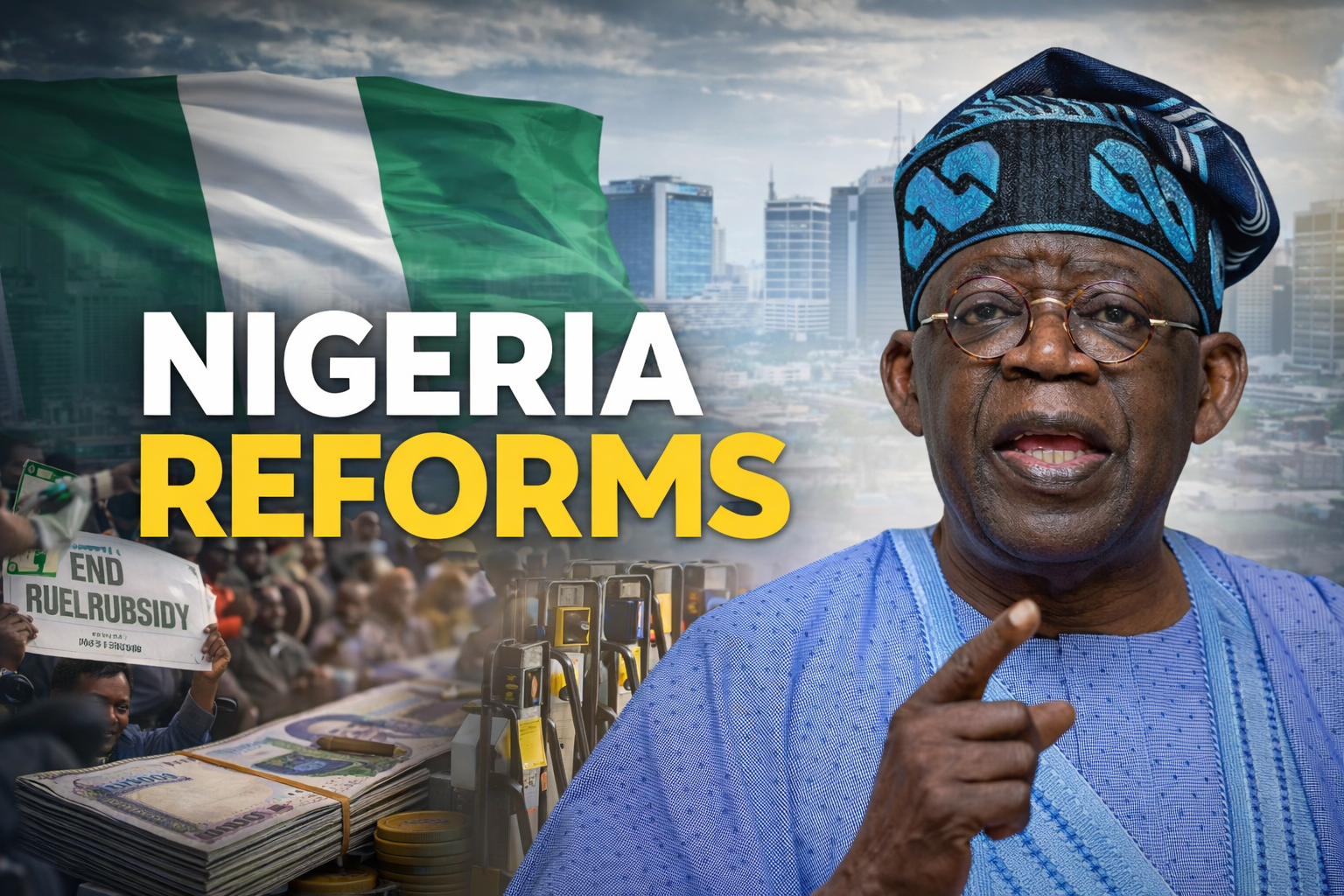
ABUJA, Nigeria — Nigeria’s President Bola Tinubu is pressing ahead with sweeping economic reforms that have reshaped the country’s finances but driven up living costs for millions, raising public concern and political pressure on his administration.
Since taking office in 2023, Tinubu has ended long-standing petrol subsidies, liberalized the foreign exchange market and approved a new set of tax laws scheduled to take effect in 2026. The government says the measures are necessary to stabilize public finances, reduce waste and attract investment.
Fuel prices jumped sharply after subsidies were removed, increasing transportation and food costs nationwide. The move was followed by changes to foreign exchange policy that allowed the naira to trade more freely, leading to currency depreciation and higher import prices.
Government officials say the reforms were unavoidable after years of revenue shortfalls and rising debt. “There was no alternative to change,” Tinubu has said, arguing that subsidy payments and currency controls were draining public resources.
The administration has introduced targeted cash transfers and other social programs to cushion the impact on vulnerable households. Authorities say millions of Nigerians have been enrolled, though some civil society groups say implementation has been uneven and insufficient to offset rising prices.
In December, Tinubu signed a package of tax reforms aimed at expanding the tax base and improving collection efficiency. The changes, which take effect in January 2026, are expected to increase government revenue but have drawn criticism from labor groups and small business associations concerned about enforcement and compliance costs.
Nigeria’s economy has shown modest growth in recent quarters, according to official data, but inflation remains high and unemployment continues to weigh on households, particularly among young people.
Despite public frustration, analysts say Nigeria is unlikely to reverse course entirely. The government has reiterated its commitment to reforms while signaling it may adjust implementation to ease social pressure.
Nigeria, Africa’s most populous country, plays a central role in regional trade and energy markets. The success of Tinubu’s reforms is being closely watched by investors, international lenders and neighboring countries facing similar economic challenges.