

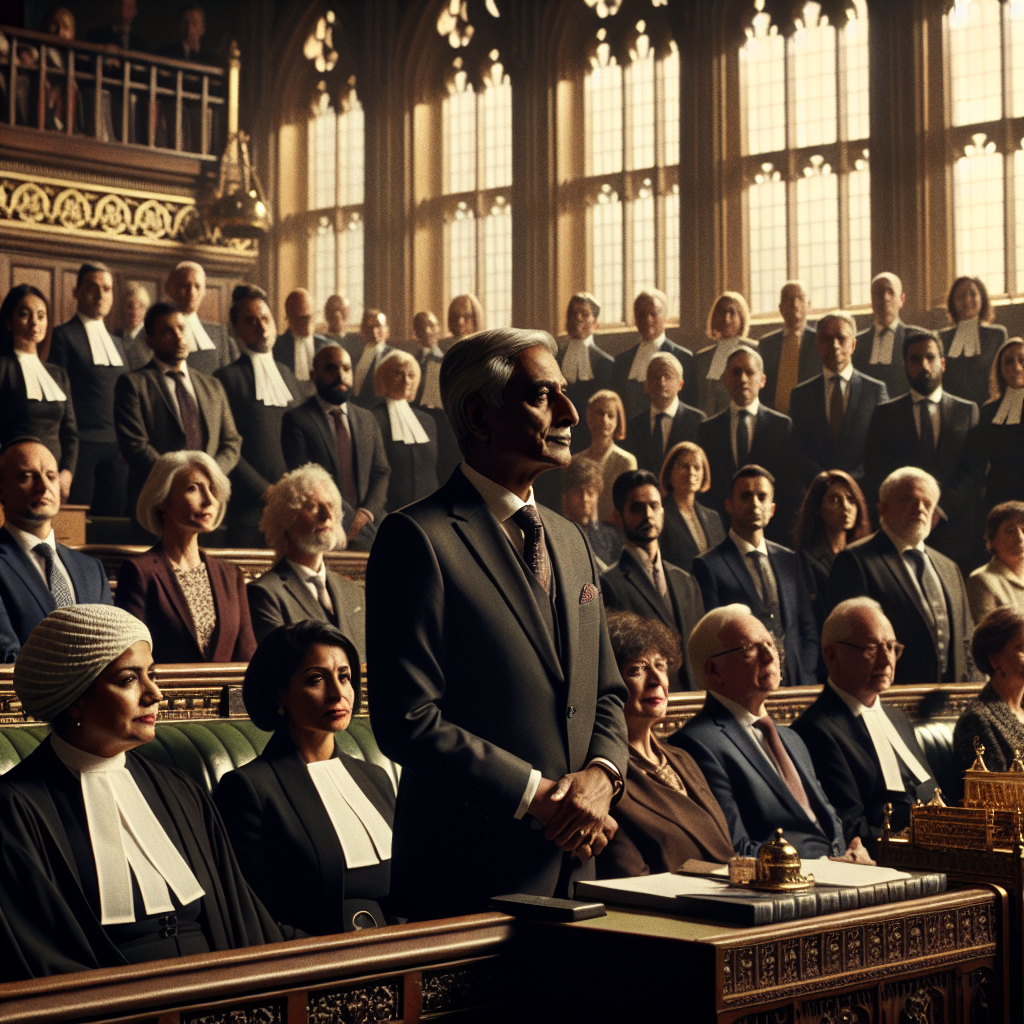
Prime Minister Narendra Modi on Thursday offered a farewell message to members of the Rajya Sabha who are completing their terms, using the occasion to underline a broader idea about parliamentary life: political careers do not end with the close of one tenure. Addressing the Upper House, Modi said that in such moments, mutual respect often rises above party divisions, and told departing members that there are no “full stops” in politics.
The remarks came as 59 Rajya Sabha members from 20 states are set to retire between April and July after completing their terms. Such transition points are a regular feature of India’s parliamentary calendar, but they also serve as important reminders of the institutional continuity that defines the country’s democracy. Unlike the Lok Sabha, which can be dissolved, the Rajya Sabha is a permanent House, with one-third of its members retiring periodically and new members entering through an indirect electoral process.
A Moment of Courtesy in a Combative Political Climate
Farewell references in Parliament are often among the few occasions when the sharp edge of partisan politics briefly softens. Modi’s emphasis on respect across party lines fits into that tradition. In a political environment frequently marked by heated exchanges, disruptions and ideological polarization, such comments carry symbolic weight. They reinforce the idea that democratic institutions rely not only on contestation, but also on civility, memory and continuity.
The Prime Minister’s message was also significant because retiring members of the Rajya Sabha often include leaders with long legislative, administrative and regional experience. Many have served as ministers, party strategists, policy specialists or key voices for their states. Their exit from the House can reshape committee work, alter party arithmetic and change the tone of debate on issues ranging from federal relations to economic policy.
Why the Rajya Sabha Matters
The Rajya Sabha occupies a distinct place in India’s constitutional framework. It is designed not merely as a revising chamber, but also as a forum where states are represented in the national legislature. Because its members are not directly elected in the same way as Lok Sabha MPs, the House often includes senior politicians, legal experts, economists, artists and public figures who bring a different kind of experience to national debate.
Over the decades, the Upper House has played a critical role in scrutinizing legislation, sending bills to committees, and raising issues that may receive less immediate political attention in the lower chamber. At times, it has acted as a moderating institution, especially when the government of the day has faced a more complicated numerical position there than in the Lok Sabha. That makes every cycle of retirements and fresh inductions politically consequential, even when the event is framed in ceremonial terms.
What This Means Politically
The retirement of 59 members across 20 states is not just a procedural development. It can influence the balance of power in the House over time, depending on which parties gain or lose representation through upcoming selections. For governments, strength in the Rajya Sabha matters because major legislative ambitions often depend on managing numbers in the Upper House. For opposition parties, it remains a crucial arena for scrutiny, resistance and coalition-building.
At the state level, these changes also reflect shifting political currents. Since Rajya Sabha members are elected by state legislators, the composition of the House often mirrors regional political trends. A retirement cycle therefore becomes a quiet but important indicator of how national and state politics intersect.
Why Readers Should Pay Attention
For readers, this story matters because Parliament is shaped not only by elections and headline-grabbing confrontations, but also by institutional transitions like these. The entry and exit of members affects how laws are debated, how governments are challenged and how states are heard in national decision-making. Modi’s remark that politics has no full stop speaks to a larger truth: public life in a democracy is an ongoing process, and experience accumulated in one role often continues to matter in another.
There is also a broader democratic message in the Prime Minister’s farewell note. In mature parliamentary systems, disagreement and respect are expected to coexist. The departure of one set of members and the arrival of another is part of how institutions renew themselves without losing continuity. In that sense, the moment was not simply about retirement. It was about the resilience of the parliamentary system itself.