


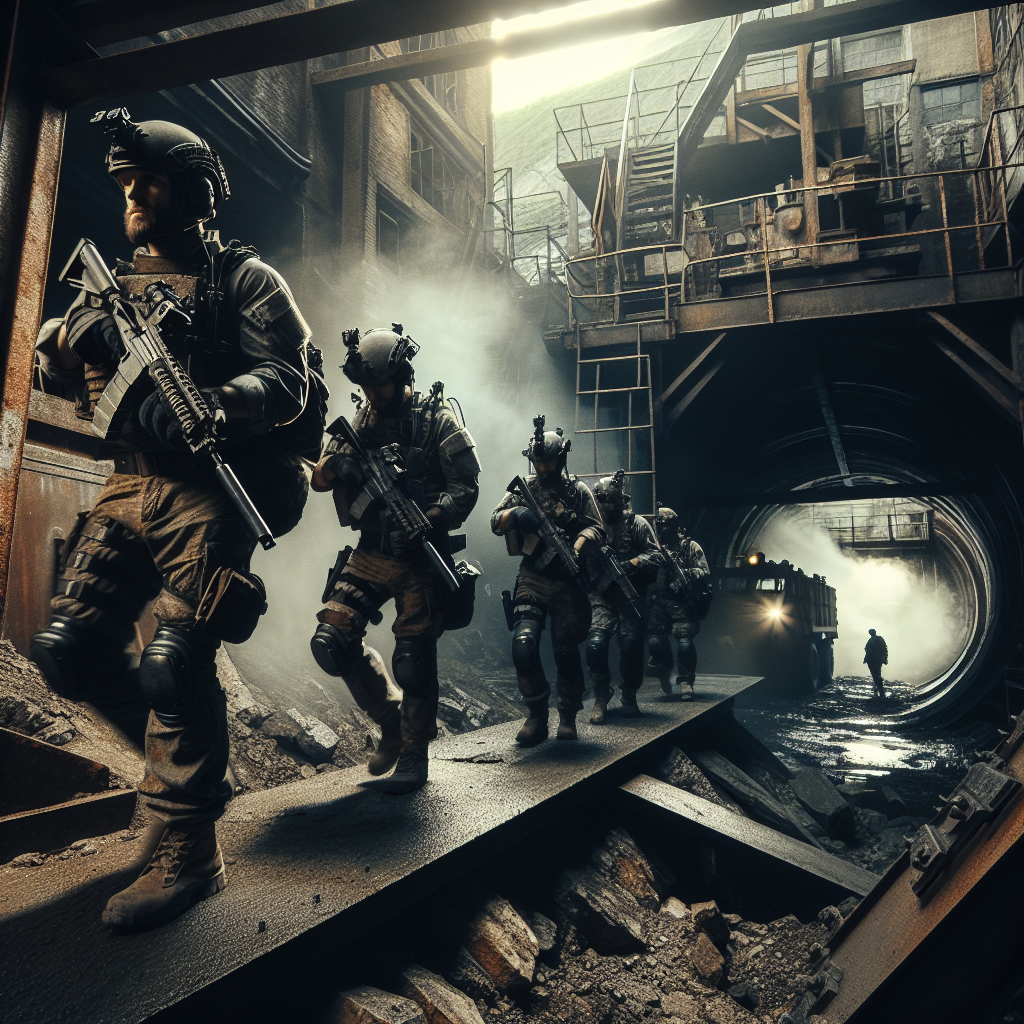
President Cyril Ramaphosa has announced a significant escalation in South Africa\’s fight against pervasive illegal mining and rampant gang violence, confirming the deployment of military forces to assist an overwhelmed police service. The decision, which tasks the country\’s Minister of Police and the South African National Defence Force (SANDF) with rapidly developing a technical plan for deployment within days, underscores the severe nature of these challenges gripping key provinces, particularly those housing the nation\’s largest cities.
A Decisive Shift in Combating Lawlessness
This move marks a crucial moment in the nation\’s struggle to restore law and order, as conventional policing methods have often proven insufficient against the highly organized and violent syndicates involved in illegal mining, colloquially known as “zama zamas,” and the deeply entrenched urban gangs. The deployment is anticipated to bring much-needed manpower, specialized equipment, and operational capacity to communities ravaged by these criminal activities, offering a glimmer of hope for residents living under the constant threat of violence and instability.
The Deep Roots of Illegal Mining
Illegal mining is not a new phenomenon in South Africa but has intensified dramatically in recent years, particularly in and around abandoned gold and platinum mines. Driven by economic desperation and facilitated by sophisticated criminal networks, these operations pose significant environmental risks, result in substantial losses of state revenue, and frequently lead to deadly underground turf wars. The “zama zamas” often operate with a ruthlessness that overwhelms local law enforcement, making areas rich in mineral resources virtually ungovernable. The military\’s intervention is expected to disrupt these illicit supply chains and reclaim control over critical mining infrastructure.
Addressing the Scourge of Urban Gangs
Parallel to the mining crisis, gang violence remains a devastating reality for many urban communities, especially in provinces like the Western Cape and Gauteng. These gangs, often embroiled in drug trafficking, extortion, and territorial disputes, sow fear and instability, making daily life precarious for ordinary citizens. Their presence undermines social cohesion, disrupts economic activity, and overstretches police resources. The SANDF\’s involvement is aimed at bolstering police efforts to dismantle these networks, restore public safety, and allow communities to reclaim their streets from criminal control.
Historical Precedent and Public Scrutiny
The deployment of the SANDF in domestic security operations is not without precedent in post-apartheid South Africa. The military has previously been called upon during periods of civil unrest, natural disasters, and to support border protection. While offering a robust solution to immediate threats, such deployments often spark debates around civil liberties, the appropriate role of the military in civilian policing, and the long-term implications for democratic governance. The effectiveness of this intervention will be closely watched, with emphasis on its ability to create sustainable peace rather than merely temporary suppression. The President\’s announcement signifies a recognition that the security challenges have transcended normal police capabilities, necessitating an extraordinary response.
Local and Global Implications
For South Africa, the success of this operation is crucial for both domestic stability and its international standing. Locally, communities yearn for peace and security, and the government faces immense pressure to demonstrate its capacity to protect its citizens and uphold the rule of law. Globally, the nation\’s ability to manage its internal security challenges impacts investor confidence, tourism, and its reputation as a stable democracy in Africa. The deployment sends a clear message that the government is prepared to take decisive action, but the true measure of its success will be the restoration of lasting safety and a reduction in the pervasive influence of criminal elements.
The Road Ahead
As the technical plan is finalized and troops prepare for deployment, the nation watches with a mix of anticipation and apprehension. This bold step reflects the profound urgency of the situation. While the immediate objective is to quell the violence and disrupt illegal operations, the long-term challenge remains to address the socio-economic factors that fuel these criminal enterprises, ensuring that military intervention is a temporary measure within a broader strategy for national recovery and sustainable development.