


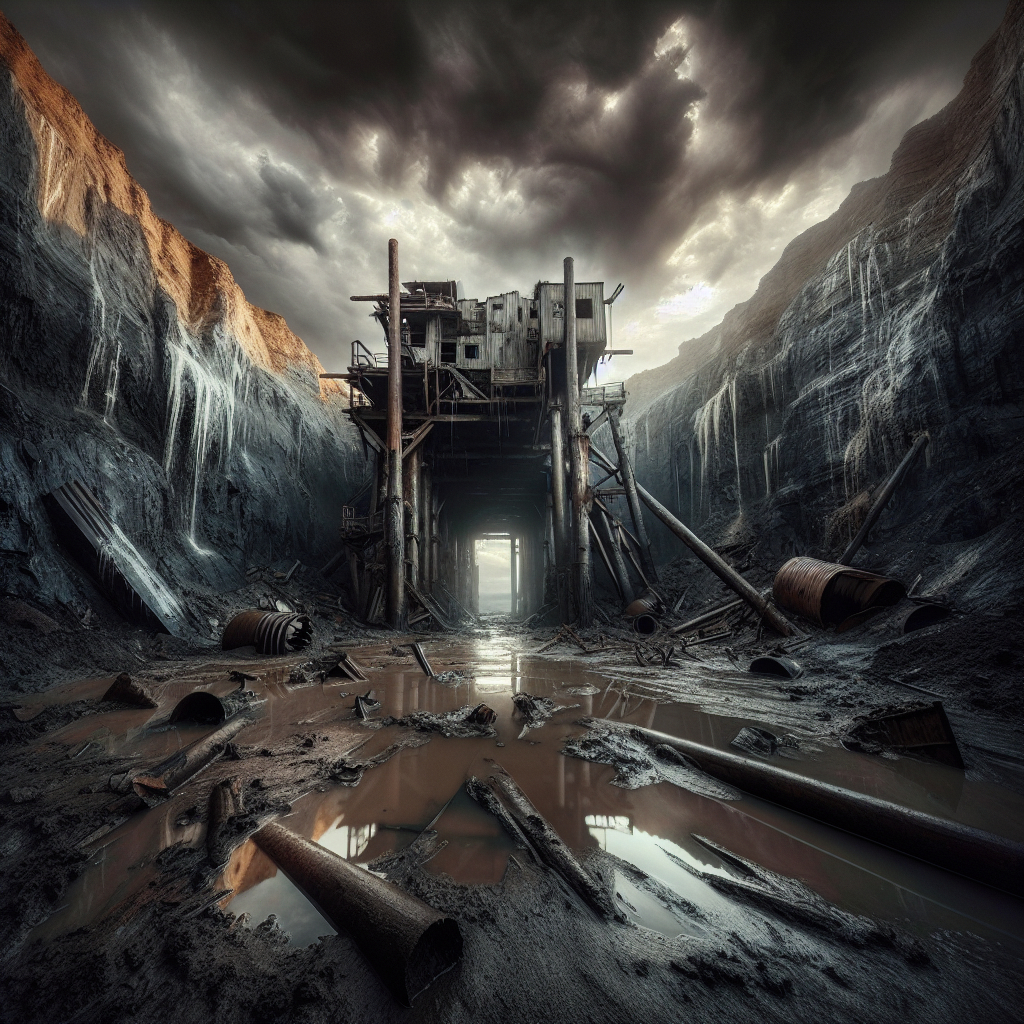
JOHANNESBURG – A profound tragedy has struck South Africa’s mining sector, as five miners who became trapped last week following a devastating mudslide are now officially presumed deceased. The grim announcement came Wednesday from the owners of the diamond mining company, who simultaneously revealed they had filed for liquidation and permanently shut down the affected mine.
The incident unfolded when a mudslide engulfed a mine shaft, leaving the five individuals unaccounted for and initiating a desperate search operation. Despite intensive efforts, the challenging conditions underground and the passage of time have led to the heart-wrenching conclusion that the miners could not have survived. This devastating outcome casts a pall over the families of the victims and the broader mining community, highlighting the perilous nature of extracting precious resources from the earth.
The company’s decision to file for liquidation and close the mine underscores the severe and multifaceted impact of the disaster. Beyond the irreplaceable loss of life, the closure will undoubtedly lead to significant job losses, further straining local economies dependent on mining operations. It also raises critical questions about corporate responsibility, safety protocols, and the financial viability of smaller mining ventures in the face of catastrophic events.
A Legacy of Risk: Mining in South Africa
South Africa boasts a rich, albeit often troubled, history as a global mining powerhouse, particularly for diamonds, gold, and platinum. This wealth has been built on the backs of generations of miners, who have consistently faced some of the world’s most dangerous working conditions. Accidents, including rockfalls, methane explosions, and shaft collapses, have long been a tragic fixture of the industry, leading to countless fatalities over the decades. While significant strides have been made in improving safety standards through stricter regulations and technological advancements, incidents like this recent mudslide serve as a stark reminder that the inherent risks remain potent. The drive for mineral extraction often pushes operations into deeper, more geologically unstable areas, continuously testing the limits of engineering and human resilience.
Broader Echoes: Economic, Social, and Ethical Considerations
The liquidation of a diamond mining company in the wake of such a tragedy sends ripples far beyond the immediate site. Locally, communities reliant on mining for employment and essential services face an uncertain future, grappling with the economic void left by a closed operation. Nationally, the incident will intensify scrutiny on mining safety regulations, their enforcement, and the oversight mechanisms for both large corporations and smaller, independent mining entities. Globally, while not directly related to the ‘conflict diamonds’ narrative, this event subtly reinforces the broader ethical debate surrounding the origin of luxury goods. Consumers are increasingly aware of supply chain transparency, and tragedies like this underscore the human cost associated with the glittering appeal of diamonds, prompting renewed discussions about responsible sourcing and the welfare of the workers at the very beginning of the value chain.
The Enduring Call for Safety and Accountability
Ultimately, this story is a poignant testament to the enduring human cost of resource extraction. It is a stark reminder that behind every valuable commodity lies a complex and often perilous process, with real people risking their lives daily. The presumption of death for these five miners, coupled with the collapse of their employer, highlights the critical need for unwavering commitment to safety, robust regulatory oversight, and genuine corporate accountability. As the world continues its demand for minerals, the responsibility falls on governments, companies, and consumers alike to ensure that such wealth is not purchased at an unacceptable price in human lives. The memory of these presumed deceased miners must serve as a catalyst for ongoing vigilance and the continuous pursuit of safer working environments across all hazardous industries.