

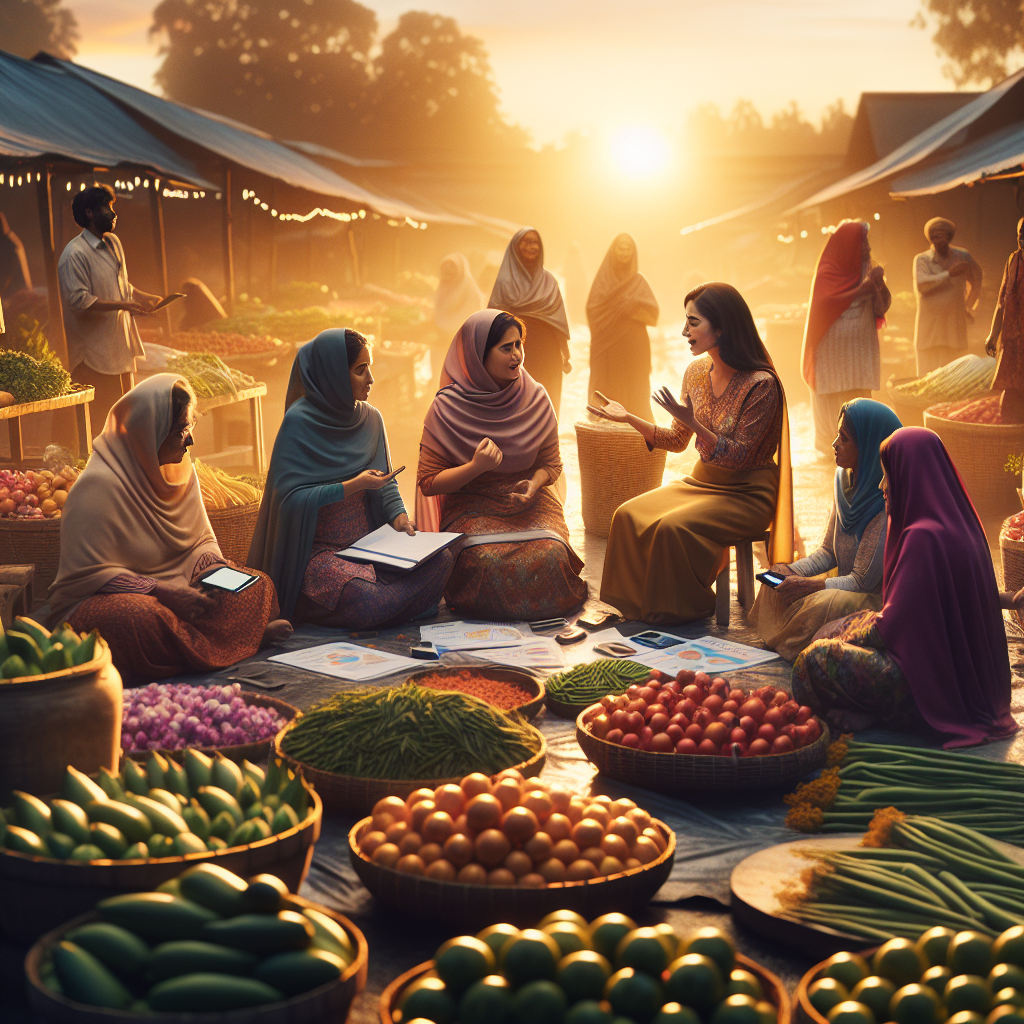
As the world prepares to mark 2026 as the International Year of Women Farmers, the debate around agriculture is widening in an important way: women can no longer be seen only as unpaid or under-recognised farm workers. Increasingly, policymakers, rural institutions and development experts are focusing on women as decision-makers, entrepreneurs and collective leaders. At the centre of that shift are women-led Farmer Producer Organisations, or FPOs, which are emerging as a promising vehicle for transforming rural economies.
These organisations bring together small and marginal producers so they can aggregate produce, access inputs, improve bargaining power and connect more effectively with markets. For women, the model carries an added significance. It offers a pathway out of the long-standing pattern in which women contribute substantially to sowing, transplanting, harvesting, livestock care and post-harvest work, yet remain excluded from land titles, formal credit, market negotiations and institutional recognition.
From invisible labour to rural enterprise
The larger historical backdrop is hard to ignore. In much of rural India, women have always played a central role in agriculture, but their work has often been treated as an extension of household duty rather than as economic activity. This has limited their access to training, financial services and ownership-based entitlements. Over time, self-help groups, cooperatives and producer collectives began creating a framework through which women could organise, save, borrow and build enterprises. Women FPOs represent the next stage of that evolution, moving from informal support structures toward market-linked rural businesses.
The argument gaining ground is that with adequate institutional support, infrastructure, capacity building, technology adoption and market facilitation, women FPOs can become vibrant hubs of rural entrepreneurship. That support matters because collective formation alone is rarely enough. Rural producer groups often struggle with storage, grading, transport, working capital, digital access and compliance requirements. Women-led groups may face additional barriers rooted in mobility restrictions, social norms and weaker control over household assets.
Why support systems will decide success
For women FPOs to succeed at scale, enabling conditions are crucial. Institutional backing can help these groups navigate registration, governance, bookkeeping and links with banks or government programmes. Infrastructure such as warehousing, processing facilities and local aggregation centres can reduce distress sales and improve value realisation. Training in business planning, quality standards and digital tools can strengthen managerial confidence and commercial viability. Equally important is market facilitation, because even well-organised producer groups can falter if they remain locked into low-value local trading networks.
The technology dimension is especially significant. Access to mobile-based market information, digital payments, weather advisories and traceability systems can help women-led enterprises move from subsistence-oriented production toward more resilient and competitive business models. In sectors such as horticulture, dairy, pulses, millets and value-added food products, collective action can also open new opportunities for branding and local processing.
What this could mean for rural economies
The implications extend far beyond individual farmers. Strong women FPOs can generate local employment, improve household incomes, encourage diversification and deepen community-level financial participation. When women gain stronger roles in farmgate decisions and enterprise management, the benefits often ripple into nutrition, education and household welfare. At a broader level, stronger producer institutions can contribute to more efficient supply chains and more balanced rural development.
There is also a global relevance to this moment. Across developing economies, the challenge is similar: women form a substantial share of the agricultural workforce but remain underrepresented in ownership and formal market structures. If women-led producer organisations in India are effectively supported, they could offer a practical model for inclusive agricultural growth in other regions facing the same inequality.
Why this story matters now
This story matters because it touches a core question in development policy: who gets recognised as an economic actor. If women farmers remain invisible, rural growth will continue to leave productive capacity untapped. If they are organised, financed and linked to markets, the effects could be transformative. The coming focus on women farmers offers an opportunity not just for symbolic recognition, but for structural change. Women FPOs show that the future of agriculture may depend as much on inclusion and institution-building as on seeds, soil and rainfall.