


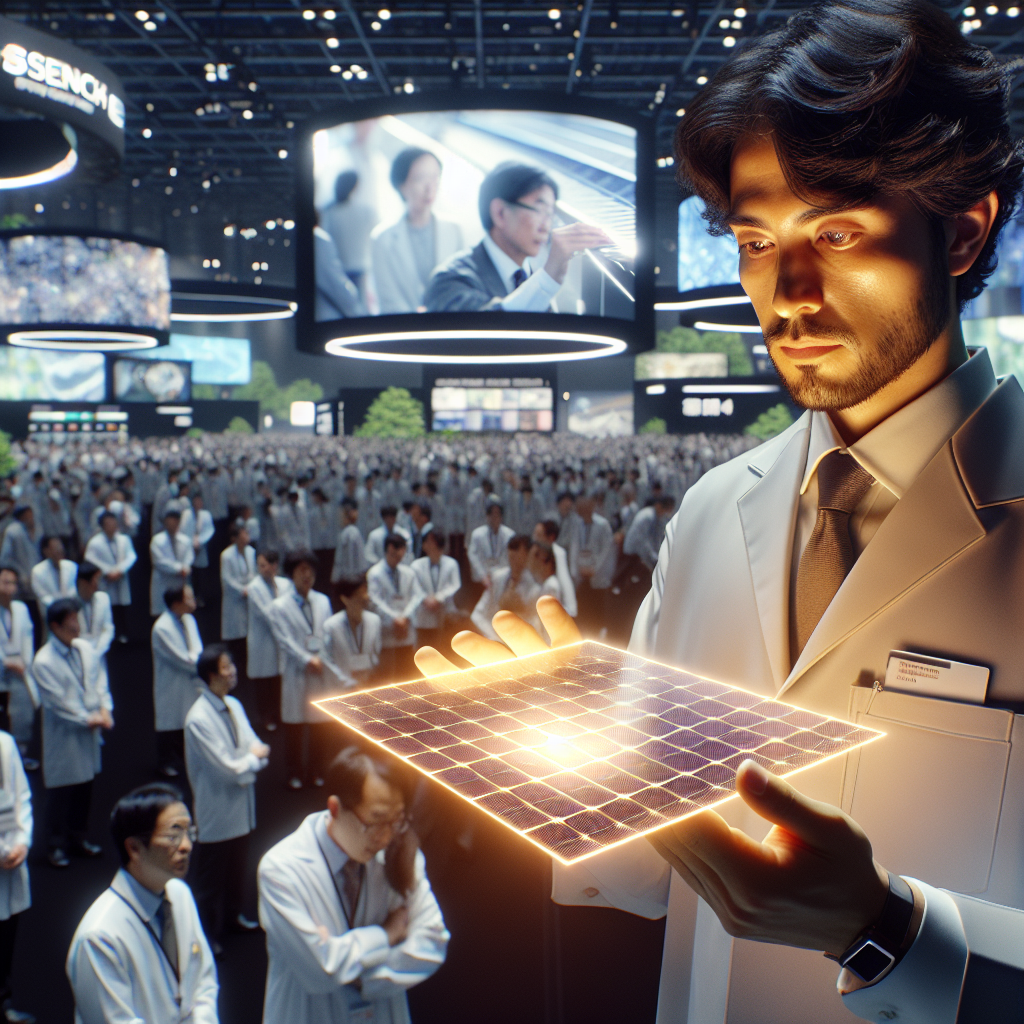
BILIGHT wrapped up PV EXPO 2026 in Tokyo with fresh momentum behind its flexible perovskite solar technology, using one of Asia’s most closely watched photovoltaic trade events to position itself at the center of the industry’s next phase. According to the company’s announcement, the three-day exhibition at Tokyo Big Sight concluded with BILIGHT securing preliminary cooperation agreements with multiple global partners, a sign that commercial interest in perovskite-based solar products continues to broaden.
The company described itself as a global leader in flexible perovskite technology and framed its presence around full-scenario solutions for the emerging “Powering AI” era. That message reflects a wider shift underway in energy markets: as artificial intelligence, data centers, connected devices and electrified infrastructure place growing pressure on power systems, solar developers and materials companies are racing to produce lighter, more adaptable and more scalable generation technologies.
Why PV EXPO Matters
PV EXPO has become a significant meeting point for manufacturers, suppliers, developers and investors across the solar value chain. Held in Japan, a market long associated with advanced electronics, materials science and high-efficiency energy systems, the event often serves as a barometer for where next-generation photovoltaic technologies may be heading. For companies like BILIGHT, appearing strongly at such an event is not only about branding. It is also about proving that emerging solar formats can move from laboratory promise to industrial partnerships.
Japan remains an especially relevant venue for that conversation. The country has limited domestic fossil fuel resources, a longstanding interest in energy security and a record of adopting advanced power technologies. In recent years, attention has expanded beyond conventional silicon panels toward alternatives that can open up new installation scenarios, including building-integrated solar, portable applications and surfaces that cannot easily support traditional rigid modules.
The Rise of Perovskite Solar
Perovskite solar cells have drawn intense global interest over the past decade because of their potential to deliver high efficiency with thinner, lighter and potentially lower-cost materials than conventional photovoltaics. Researchers and manufacturers have been especially attracted to the technology’s flexibility and the possibility of deploying it on curved, lightweight or previously unusable surfaces. That has made perovskites one of the most discussed frontiers in solar innovation, even as the industry continues working through challenges tied to durability, large-scale manufacturing and long-term commercialization.
Flexible perovskite products, in particular, promise to expand solar’s role beyond rooftops and large utility sites. They could be used in transportation, consumer electronics, industrial facilities and urban environments where weight, shape or installation limits have restricted traditional solar adoption. BILIGHT’s emphasis on “full-scenario” solutions suggests an effort to capture that wider market, rather than compete only in standard panel segments.
Why the Story Matters
The importance of this development goes beyond one company’s exhibition success. The energy demands associated with AI infrastructure are becoming a major strategic concern for governments, utilities and technology companies. If new solar technologies can be deployed in more places and integrated more seamlessly into buildings and devices, they may help reduce pressure on centralized grids and diversify clean power supply. That is particularly relevant in densely built urban markets across Asia, where available land for conventional solar farms can be limited.
For readers, the bigger takeaway is that the solar industry is entering a more specialized era. Conventional silicon remains dominant, but emerging materials such as perovskites are increasingly being judged on how well they solve real-world problems: powering distributed electronics, supporting smart cities, and complementing energy-hungry digital infrastructure. Preliminary cooperation agreements announced at trade fairs do not guarantee large-scale deployment, but they do indicate where commercial attention is moving.
BILIGHT’s showing at PV EXPO 2026 therefore offers a snapshot of a broader transition. Solar is no longer only a story about adding more panels to rooftops and fields. It is also becoming a story about where power can be embedded, how new materials can unlock new markets, and how the clean energy sector intends to keep pace with the electricity needs of an AI-driven economy.