


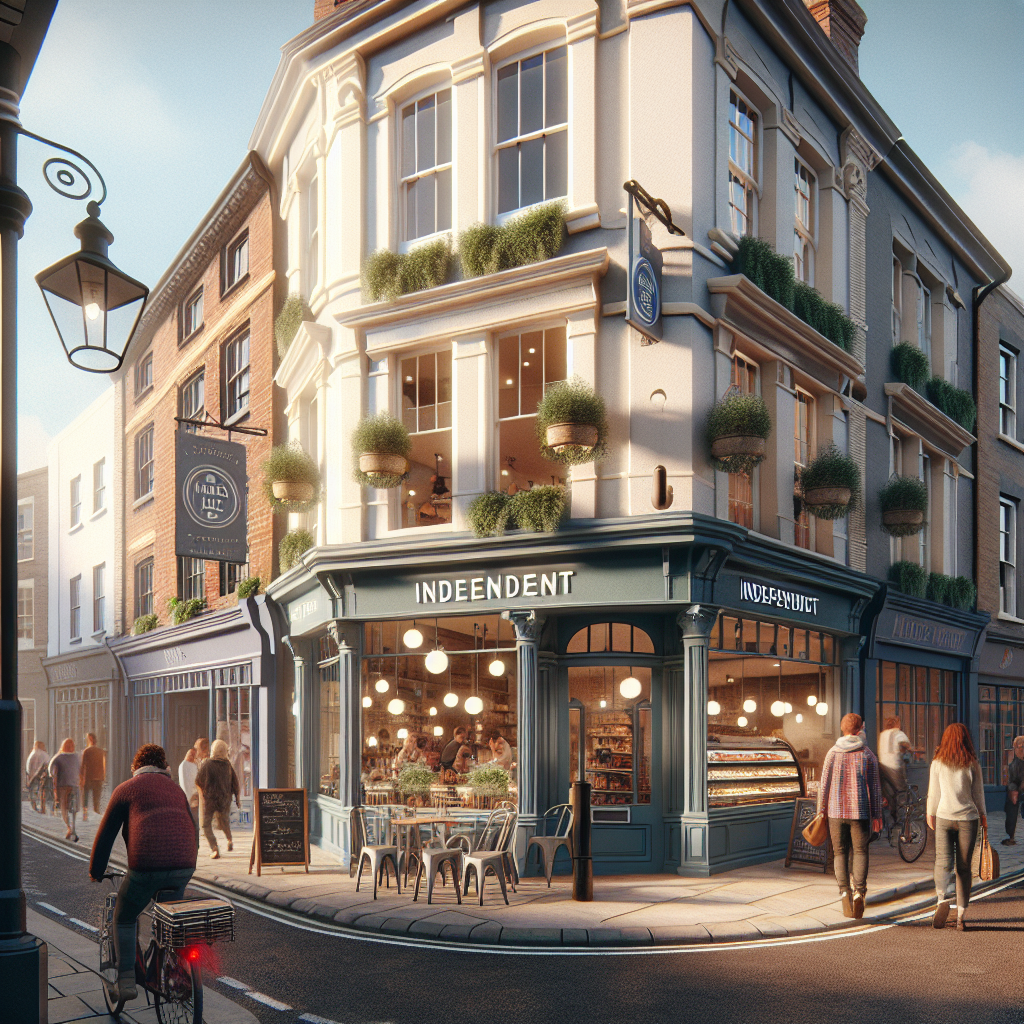
A prominent empty shop unit in Banbury town centre is set to begin a new chapter after the name of the incoming cafe at the former Shoezone premises was revealed. The unit at 1 High Street, on the corner of Broad Street, has stood vacant since the footwear retailer closed last year as part of a wider run of store closures, but it has now been converted for a new food and drink business.
The change is a noticeable one for one of the town centre’s more visible corner properties. Positioned at a busy point where High Street meets Broad Street, the site has long been the kind of unit that shapes first impressions of the shopping area. An occupied, active business in such a location can help create a sense of momentum, while an empty storefront can do the opposite.
Planning permission was previously granted for the property to change use, paving the way for its transformation from a retail outlet into a cafe. With the new business name now in view, the development marks another example of how town centres are adapting as traditional retail patterns continue to shift.
Why the former Shoezone site matters
At first glance, one shop changing hands may seem like a routine high street story. In reality, it reflects a much broader trend affecting towns across the UK. Many centres that were once dominated by national chains selling clothing, shoes and household goods are being reshaped by a different mix of businesses, with cafes, restaurants, beauty services, convenience operators and leisure-focused tenants increasingly taking over former retail units.
This is happening for several reasons. Online shopping has steadily changed how people buy everyday items, reducing demand for some bricks-and-mortar stores. At the same time, town centres are trying to become places where people spend time rather than simply complete errands. Food and drink businesses are often seen as part of that shift because they encourage longer visits and can support footfall for neighbouring shops.
For Banbury, the reopening of a corner unit is therefore about more than a new place to buy coffee. It is also part of the ongoing effort to keep the town centre lively, occupied and relevant at a time when many high streets are facing pressure.
A wider high street transformation
Shoezone has been a familiar name on British high streets for decades, particularly in market towns and local shopping districts. But like many retailers with large physical store networks, it has faced the challenge of changing consumer habits, rising operating costs and the uneven performance of town centre locations. Closures in one town are often tied to national commercial decisions rather than purely local demand.
That is why the reuse of a former chain store can carry symbolic value. Empty units can quickly become a visible reminder of decline if left untouched for too long. By contrast, a new independent or expanding hospitality business can suggest reinvestment and adaptability. Even small changes in occupancy can affect how safe, welcoming and commercially healthy a town centre feels to residents and visitors.
Banbury, with its historic market-town identity and role as a commercial hub for the wider area, is not immune to the same retail pressures seen elsewhere. Yet its central streets still benefit from regular foot traffic, established businesses and a public expectation that the town centre should remain a focal point for shopping, meeting and socialising. New openings help reinforce that role.
Local implications for Banbury
The arrival of a cafe in a central position could bring practical benefits. It may increase activity during the day, attract people who might otherwise pass through quickly and add to the range of reasons to visit the High Street. Nearby businesses can benefit when customers linger in the area, particularly in locations where a cluster of shops and services depends on shared footfall.
There is also a visual impact. A refurbished unit on a key corner can improve the appearance of the street scene and signal that investment is still taking place despite economic uncertainty. For residents, that matters because town centres are not just commercial zones; they are also public spaces that shape local identity.
Whether the new cafe becomes a long-term success will depend on familiar factors such as pricing, quality, competition and customer loyalty. But its opening is still significant as a sign that vacant space in Banbury can be brought back into use rather than left idle.
Why readers should care
Stories like this resonate because they are really about the future of the places people live. A new cafe at the former Shoezone unit is not just a business update; it is part of the continuing reinvention of the British high street. For Banbury residents, it offers a tangible example of change in a town centre many people use every week. In an era when empty shops can easily become the dominant narrative, a new opening brings a more hopeful message: that even after closures, prominent sites can find a fresh purpose.