


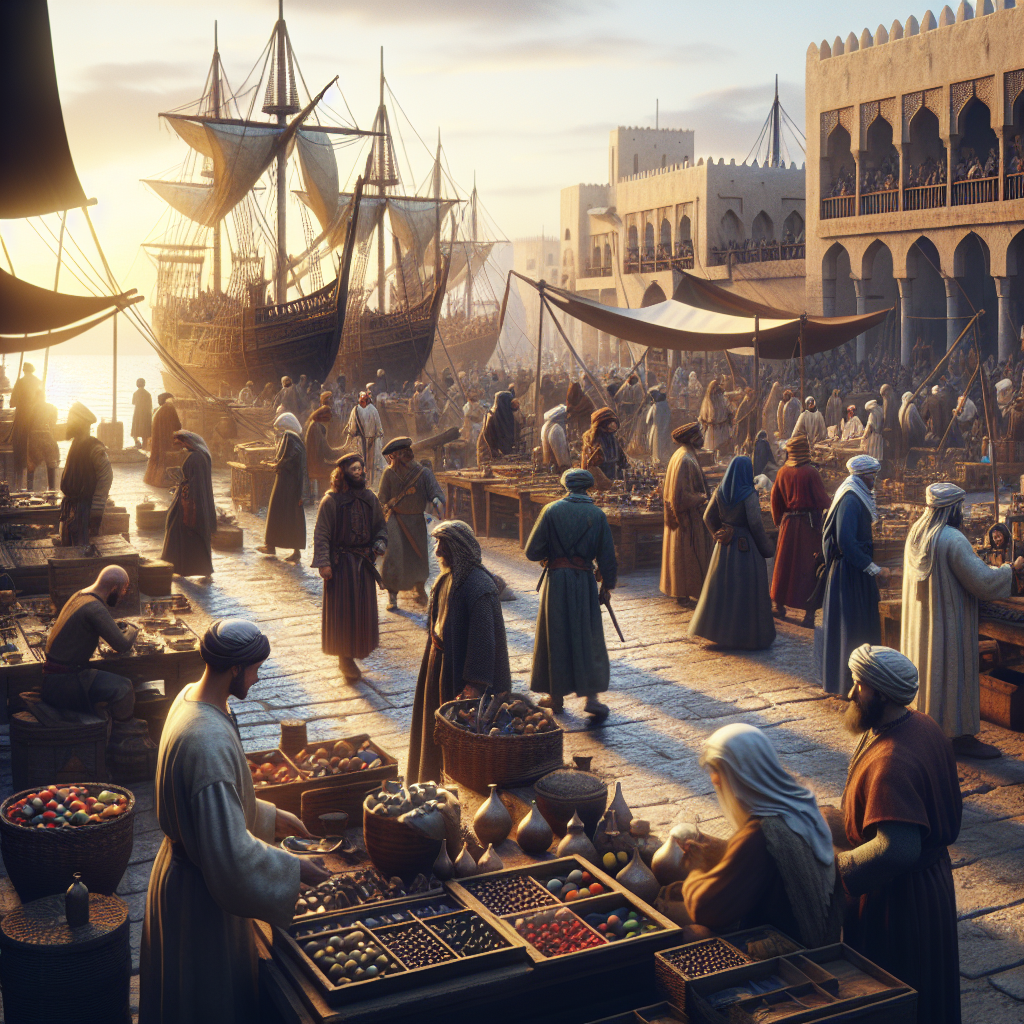
Ibiza is often imagined as a small Mediterranean island on the edge of bigger historical currents. But new genetic research suggests that, during the medieval Islamic period, it was anything but isolated. According to a study published in Nature Communications and led by the Centre for Palaeogenetics, a collaboration between Stockholm University and the Swedish Museum of Natural History, medieval Ibiza was deeply connected to a wider world that stretched across Europe, North Africa and even into the Sahel, south of the Sahara.
The findings point to a population shaped by movement, trade and social contact across long distances. Researchers found evidence that Ibiza’s inhabitants were genetically diverse and linked not only to nearby Mediterranean regions but also to populations from sub-Saharan Africa. The study also highlights signs of rapid genetic mixing and evidence of leprosy, adding a public health dimension to a picture already rich in cultural exchange.
Ibiza in a larger medieval world
To modern readers, the idea of Ibiza as a crossroads may seem surprising, but it fits with what historians know about the medieval western Mediterranean under Islamic rule. From the early medieval period onward, the region was tied together by maritime trade routes, political alliances, religious networks and migration. Ports and islands were not remote sidelines; they were strategic nodes linking al-Andalus, North Africa, the Balearic Islands and the broader Mediterranean economy.
Under Islamic governance, cities and islands often became part of highly mobile societies in which merchants, sailors, soldiers, scholars and enslaved people moved between continents. Goods such as textiles, ceramics, metals and agricultural products traveled alongside people and ideas. The new DNA evidence from Ibiza strengthens the view that these exchanges were not abstract connections on a map, but relationships that left a biological imprint in local communities.
What the DNA reveals
The most striking aspect of the research is the indication of trans-Saharan connections. Historians have long documented trade routes that crossed the Sahara, carrying commodities, wealth and people between North Africa and the Sahel. Genetic evidence from Ibiza now appears to show that these links reached farther into Mediterranean island life than many might have assumed. That suggests the island participated in networks extending well beyond Europe and the North African coast.
The study’s reference to rapid genetic mixing is equally significant. It implies that medieval Ibiza was not simply a place where outsiders passed through, but one where communities formed quickly across different backgrounds. In other words, diversity was not peripheral to island life; it may have been one of its defining features.
The evidence of leprosy adds another layer. In the medieval world, disease moved along the same routes as commerce and migration. Findings like this can help researchers better understand how illnesses spread, how communities lived with chronic disease and how mobility shaped health outcomes centuries before the modern era.
Why this matters now
The study matters because it challenges simplistic ideas about the medieval past. Public imagination often treats that era as divided into neat cultural or geographic blocks: Christian Europe here, Islamic North Africa there, sub-Saharan Africa somewhere beyond the frame. Research like this shows a much more entangled reality. Medieval societies were interconnected, and even relatively small islands could be part of global systems of exchange.
That has implications beyond academic debate. In Europe especially, arguments about identity, migration and heritage often rely on narrow readings of history. Discoveries from ancient DNA are increasingly showing that population movement and cultural mixing were not modern disruptions but long-standing features of human societies. Ibiza’s medieval population appears to be another example of that deeper, more complex story.
A richer picture of Mediterranean history
For readers, the broader takeaway is that archaeology and genetics are reshaping how history is written. Where written records are incomplete or focused on elites, DNA can reveal hidden dimensions of everyday life: who lived together, where their ancestors came from and how communities changed over time. In the case of Ibiza, the new research turns a familiar tourist island into evidence of a medieval world that was vibrant, mobile and unexpectedly cosmopolitan.
Far from being a quiet outpost, medieval Ibiza emerges as a meeting point of continents. Its story is a reminder that the Mediterranean was never just a boundary between worlds. It was, and for centuries had been, a bridge.