


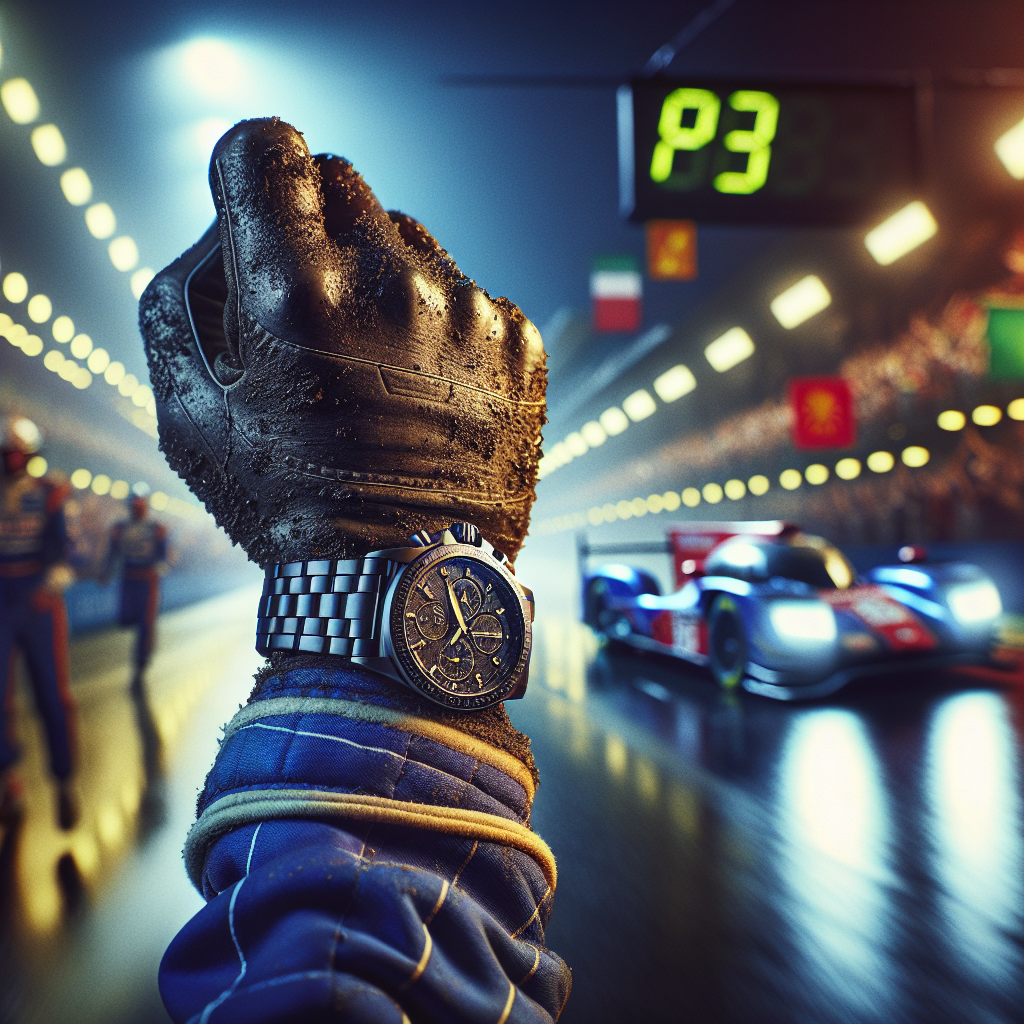
In an era when Formula 1 often dominates headlines, endurance racing has been quietly rebuilding its cultural and commercial momentum. At the center of that revival is one of motorsport’s most distinctive symbols of achievement: the Rolex Daytona. For roughly six decades, drivers competing in the 24-hour sports car race at Daytona in Florida have chased not only a major victory, but also the watch that has become inseparable from the event’s mythology.
The appeal goes beyond luxury branding. In endurance racing, where victory depends on speed, discipline, teamwork and mechanical survival over a full day and night, a Rolex carries a different emotional weight than a conventional trophy. It is wearable proof of having endured one of motorsport’s most demanding tests. That helps explain why, even as racing series evolve and audiences shift, the Daytona prize still exerts such a pull on professional drivers.
A race that built its own legend
The Daytona endurance classic has long occupied a special place in global motorsport. Held in Florida and run over 24 hours, it forms part of a tradition that prizes resilience as much as outright pace. Unlike shorter races, endurance events reward consistency, traffic management, strategy, weather judgment and the ability to avoid mistakes when fatigue begins to erode concentration.
That formula has made Daytona one of the few races whose prestige can rival championships in the eyes of many competitors. To win there is to join a lineage that stretches across generations of sports car racing. The Rolex awarded to winners became, over time, more than a sponsor’s gesture. It turned into a shorthand for belonging to an elite club of drivers who succeeded under uniquely punishing conditions.
The broader resurgence of endurance racing
The renewed attention around endurance racing is not happening in isolation. The category has benefited from stronger manufacturer interest, a broader mix of professional and star-name drivers, and a fan base increasingly drawn to formats that feel less predictable than tightly controlled sprint racing. Major events such as Le Mans continue to command huge crowds, while Daytona has retained its status as a season-opening showcase with international relevance.
This matters because endurance racing offers something distinct in the modern sports marketplace. It combines engineering ambition with human vulnerability. Cars are pushed to the limit for hours on end, but so are the people inside them and the crews supporting them. That creates drama that is easier for casual audiences to connect with than technical regulations alone.
Why the Rolex still matters
The watch itself has an unusual power in motorsport culture. Most sporting prizes stay in cabinets; a Daytona can be worn, seen and passed down. That makes it both personal and public, a symbol that travels beyond the racetrack. In a profession where careers can be short and success fleeting, tangible markers of achievement matter deeply.
There is also a powerful historical loop at work. The Rolex Daytona is not merely attached to the event by name recognition. It has become part of the story drivers grow up hearing. Young racers learn that winning at Daytona means earning an object associated with legends of the discipline. That sense of continuity strengthens the race’s prestige and helps preserve endurance racing’s identity in a crowded entertainment landscape.
What it means for fans and the industry
For readers, this story is about more than an expensive watch. It shows how traditions survive in sport even as media attention shifts elsewhere. In motorsport, heritage still has real economic and cultural value. Iconic prizes help races stand out, attract sponsors, deepen fan loyalty and give athletes milestones that resonate beyond a single season.
Globally, endurance racing’s revival suggests there is room in modern sport for formats built on patience, complexity and shared effort. Locally, flagship events such as Daytona continue to generate tourism, support jobs and reinforce the host venue’s international identity. And for professionals in the paddock, the message is simple: some rewards cannot be reduced to money or points. At Daytona, the watch remains a symbol of mastery, and that is why drivers still want it so badly.