


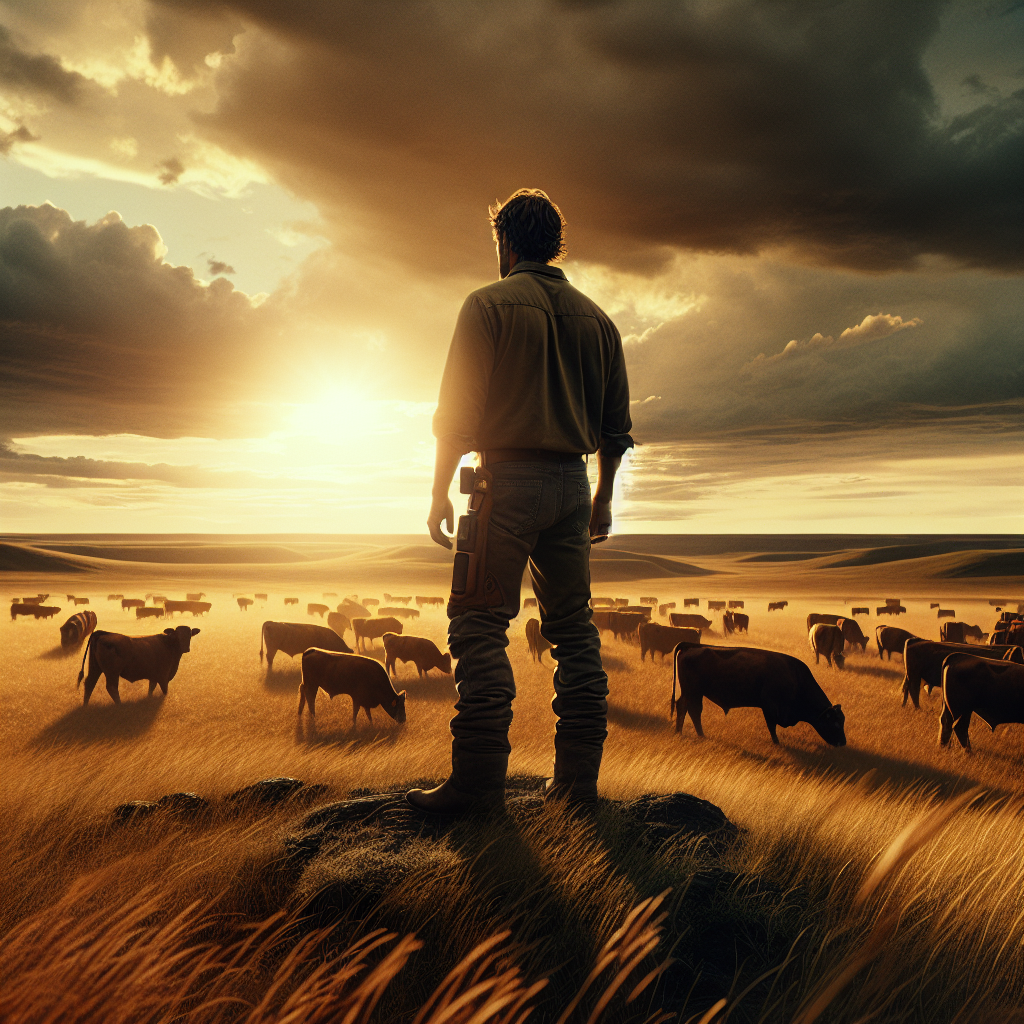
On ranches across the American West, a technology once viewed as futuristic is beginning to replace one of the oldest tools in livestock management: the physical fence. Last spring, rancher Alan Williams received a federal grant to replace some fencing on his cattle operation in southern Idaho, part of a broader shift toward so-called virtual fencing. Williams, based in Delta, Utah, moves cattle north with his brother Jared each June, and their experience reflects a larger experiment underway in ranch country as producers look for ways to manage herds with more flexibility and less permanent infrastructure.
Virtual fencing generally relies on GPS-enabled collars worn by cattle. Ranchers set digital boundaries, and when animals approach those lines, the collars emit warning sounds and, if needed, a mild corrective stimulus intended to turn them back. The idea is to guide the herd without building miles of barbed wire, electric fence or other physical barriers across rangeland. Supporters say the system can help ranchers rotate grazing more precisely, protect streams and sensitive habitat, and reduce conflicts with wildlife migration routes.
A new tool for an old industry
Ranching in the West has long depended on fencing to divide pastures, contain cattle and manage grazing pressure. But fencing has always been expensive, labor-intensive and politically complicated, especially on the patchwork of private, state and federal lands that define much of the region. Harsh weather, rough terrain and long distances make installation and repair an ongoing burden. In many places, fences also create unintended ecological consequences by fragmenting habitat and obstructing animals such as pronghorn, elk and deer.
That helps explain why virtual fencing has attracted attention not just from ranchers, but also from conservation groups and public land managers. By allowing boundaries to shift without posts and wire, the technology offers a way to keep cattle out of restoration zones, riparian areas or recently burned ground while preserving more open movement for wildlife. In theory, it can also let ranchers respond faster to drought, forage conditions and seasonal changes, adjusting grazing patterns on a computer or phone instead of dispatching crews to move fencing by hand.
How the technology works — and why it is debated
The promise of virtual fencing comes with questions that are central to its adoption. One is animal welfare. Critics often focus on whether the collars hurt cows, since many systems use an audio cue followed by an electric correction if the animal continues forward. Developers and ranchers who use the technology argue that cattle can be trained to respond to the sound before the stronger signal is needed, reducing repeated contact. Still, the issue remains sensitive, and acceptance depends on how consistently and humanely the systems perform in real-world conditions.
There are also practical concerns. Collars must function across vast, remote landscapes where weather, terrain and connectivity can complicate operations. Upfront costs may be high, and many ranchers are understandably cautious about replacing durable materials with software, batteries and satellites. For multi-generation operations, adopting new systems can mean rethinking not only equipment but also tradition.
Why this matters beyond the ranch gate
This story matters because it sits at the intersection of food production, land stewardship and the future of the rural West. Ranchers are under pressure from drought, labor shortages, rising costs and public scrutiny over how land is used. Technologies that promise efficiency while addressing environmental concerns are likely to shape who can stay in business and how landscapes are managed in the coming decades.
The implications could extend well beyond Idaho or Utah. Similar tools are being watched in grazing regions around the world where producers face the same challenge: how to raise livestock while protecting water, soils and biodiversity. If virtual fencing proves reliable and humane at scale, it could influence conservation policy, public land grazing practices and even how governments design farm and climate programs.
For now, the technology is not erasing all fences overnight. But on Western ranches where every mile of wire costs money and every pasture decision carries ecological consequences, virtual fencing is emerging as more than a gadget. It is becoming a test case for whether tradition and technology can work together on landscapes that are economically vital, environmentally sensitive and deeply contested.