


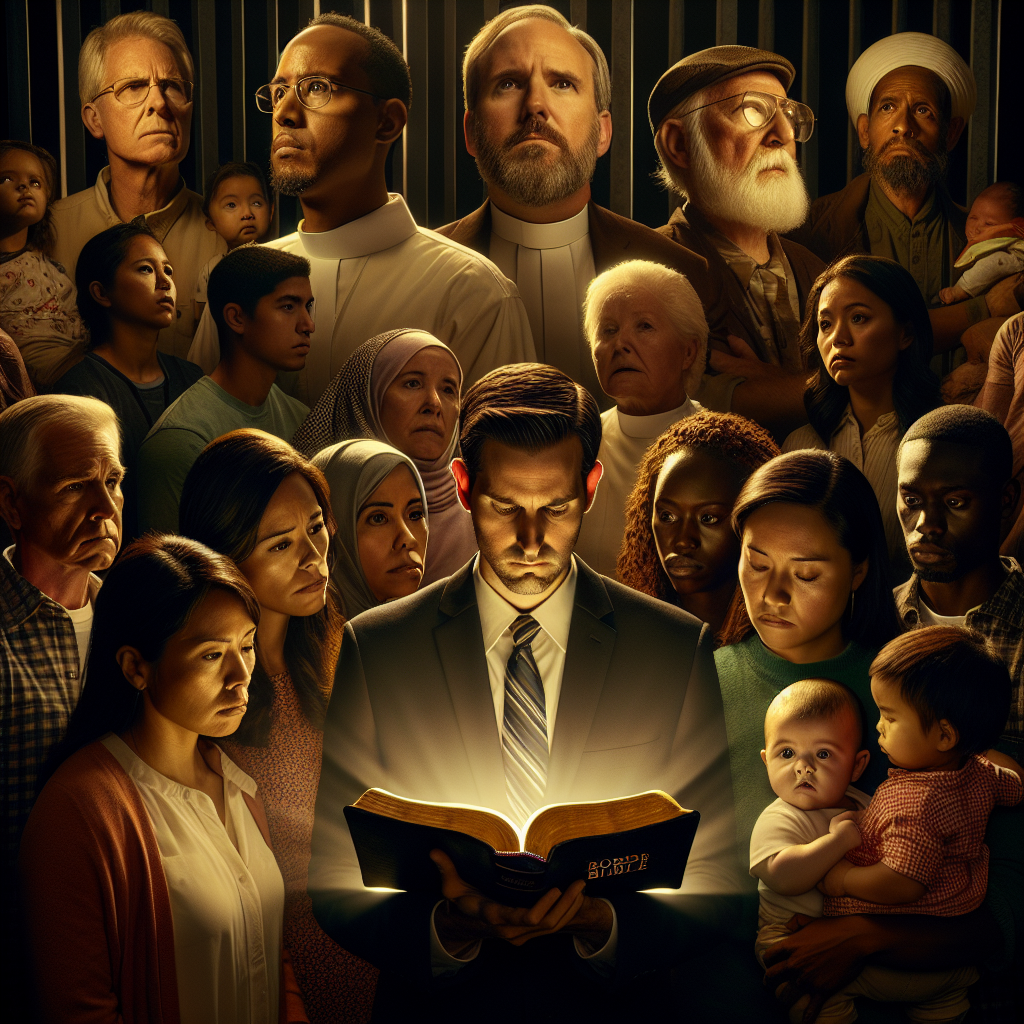
A deepening debate inside American evangelicalism is exposing a broader struggle over faith, politics and national identity. At the center of the dispute is a difficult question: can Christians support aggressive immigration enforcement while remaining faithful to biblical teachings about compassion, hospitality and the treatment of strangers?
The issue has taken on new urgency as prominent conservative officials, including Speaker Mike Johnson and Defense Secretary Pete Hegseth, have been cited in discussions about using scripture to defend hard-line policies, including deportation and war. Their arguments reflect a long-running tradition in American politics of invoking the Bible in public life. But for many evangelicals, especially Latino Christians, pastors working in immigrant communities and believers who prioritize the social teachings of Jesus, that use of scripture has become a source of profound moral unease.
A Long-Standing Tension in American Christianity
This conflict did not begin with Donald Trump, though his rise sharpened it dramatically. White evangelical voters became one of the most reliable pillars of Trump’s political coalition, even as his language on immigrants, refugees and border enforcement alarmed many faith leaders. For years, immigration has tested the balance between two commitments that often coexist uneasily on the religious right: respect for law and order, and the biblical call to welcome the stranger.
That tension has deep roots. American churches have long disagreed over how to apply scripture to public policy, from slavery and segregation to war, poverty and civil rights. Evangelicalism itself is not a single voting bloc or theological monolith. It includes white conservative churches, Black evangelical traditions, immigrant congregations and growing Latino networks, all of which can read the same biblical texts through very different lived experiences.
In that sense, today’s dispute over immigration is also a dispute over who gets to define evangelical public witness in the United States. Is the movement primarily a defender of national sovereignty and cultural conservatism, or a community shaped by personal conversion and moral obligations toward the vulnerable? The answer increasingly depends on whom one asks.
Why Immigration Has Become a Spiritual Flashpoint
Immigration is not merely a policy topic for many churches. It is personal. Congregations across the country include undocumented members, mixed-status families, refugees, asylum seekers and citizens with close ties to immigrant communities. For pastors serving those congregations, enforcement actions are not abstract political talking points. They can mean fear, family separation and uncertainty inside the pews.
Supporters of stricter enforcement often argue that governments have a legitimate duty to maintain borders, protect public order and uphold existing laws. Many evangelicals who hold this view say compassion and enforcement are not mutually exclusive. Critics, however, contend that this framing can minimize the human cost of deportation and turn Christianity into a tool for nationalist politics rather than a challenge to it.
The clash is especially visible when political leaders cite scripture to justify state power. For some believers, such arguments represent moral clarity. For others, they echo past moments when religion was used to bless policies later judged harshly by history. That is why the current debate feels larger than immigration alone: it raises questions about whether faith is being used to guide conscience or simply to sanctify political preferences.
What This Means for Churches and Public Life
The implications are both local and national. In local churches, disagreements over immigration can strain congregational unity, alter preaching priorities and reshape leadership coalitions. Nationally, they may influence how younger Christians, immigrants and voters of color view evangelicalism as a public force. If the movement is seen as aligned mainly with punitive state action, it risks deepening internal fractures and accelerating generational disillusionment.
There is also an international dimension. American evangelical rhetoric often travels beyond U.S. borders through missions, media and political influence. How prominent Christians talk about migrants, war and national belonging can affect the global image of American religion, especially in regions where churches are growing rapidly and migration is a lived reality.
For readers, this story matters because it reveals how political choices are shaped not only by party loyalty, but by competing moral frameworks. The evangelical reckoning over immigration is ultimately a test of how religious communities understand power, mercy and obligation in a polarized age. It is also a reminder that debates over policy are often, at heart, debates over what kind of people a nation believes itself called to be.