


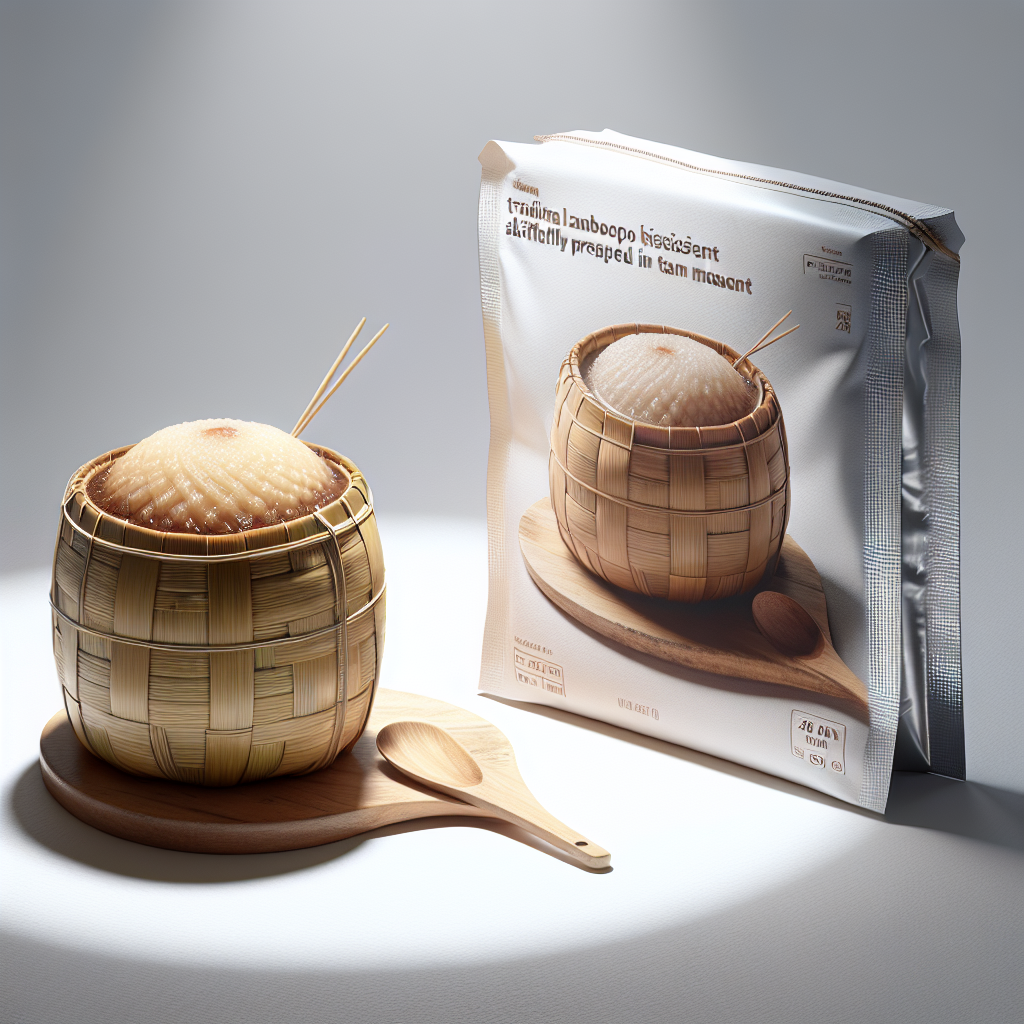
A traditional Thai dessert long associated with roadside stalls, temple fairs, and coastal day trips is being reimagined for a modern, international audience. A lecturer in the Department of Food Technology at the Faculty of Science, Chulalongkorn University, has developed an instant version of Khao Lam, the beloved glutinous rice dessert cooked in bamboo, while preserving the sweet and creamy taste that made Nong Mon Khao Lam famous. According to the source material, the new format allows consumers to prepare Khao Lam at home in about 25 minutes, potentially transforming a community-based specialty into an export-ready food product.
Khao Lam is one of Thailand’s most recognizable traditional snacks. At its most familiar, it consists of glutinous rice mixed with coconut milk, sugar, and often beans, then roasted inside sections of bamboo over heat. The bamboo acts as both container and cooking vessel, giving the dessert a distinct aroma and texture. In many parts of Thailand, Khao Lam is more than a sweet treat; it is a cultural marker tied to local identity, seasonal travel, and artisanal foodmaking. The Nong Mon area in Chonburi, in particular, has become synonymous with a well-known style of Khao Lam valued for its rich, creamy flavor.
From Local Specialty to Convenient Food Innovation
The challenge with traditional Khao Lam has always been convenience. Its conventional preparation requires time, fresh ingredients, and bamboo, as well as some skill in balancing moisture, sweetness, and heat. That makes it difficult to reproduce in ordinary home kitchens, especially outside Thailand. The instant version developed at Chulalongkorn University addresses that barrier directly. By reducing preparation to a relatively short process, the product has the potential to make a once labor-intensive dessert accessible to students, busy households, Thai communities abroad, and international consumers curious about Southeast Asian cuisine.
This kind of innovation reflects a broader trend in food science: preserving the identity of traditional foods while adapting them to contemporary lifestyles. Around the world, many regional specialties have been lost, diluted, or industrialized beyond recognition when commercialized at scale. What makes this development notable is the stated effort to preserve the signature flavor profile associated with Nong Mon Khao Lam rather than simply producing a loosely inspired convenience food.
Why the Story Matters
For readers, this story is not only about a dessert. It highlights how universities can serve as a bridge between research, heritage, and economic opportunity. Academic food technology is often discussed in terms of safety, shelf life, and processing efficiency, but its cultural role can be just as important. When researchers help local foods travel farther without losing their character, they support both culinary preservation and rural livelihoods.
That matters in Thailand, where many community products have strong reputations at home but face obstacles in reaching wider markets. Traditional packaging, short shelf life, and complex preparation methods can limit growth. An instant Khao Lam could help overcome some of these constraints, creating new possibilities for small producers, souvenir markets, and food exporters. It also aligns with rising global interest in authentic Asian desserts and convenient premium foods that carry a clear story of origin.
Cultural Heritage in a Global Food Economy
The international potential of Khao Lam comes at a time when consumers are increasingly drawn to foods that offer both novelty and authenticity. Thai cuisine is globally known for dishes such as pad thai, green curry, and mango sticky rice, but many traditional snacks remain less visible abroad. An easier-to-prepare version of Khao Lam could broaden that picture, introducing more people to a dessert that has deep roots in Thai food culture.
There is also a symbolic dimension to this development. Foods once limited by geography are now entering global circulation through science, packaging, and branding. If handled carefully, that process can strengthen rather than weaken local identity. An exportable Khao Lam does not have to replace the charcoal-roasted bamboo cylinders sold in Thailand’s local markets; instead, it can serve as a gateway, encouraging more interest in the original craft and the communities that sustain it.
In that sense, the instant Khao Lam project represents something larger than convenience. It is an example of how traditional knowledge and modern research can work together to keep heritage foods relevant in a fast-moving world. For Thailand’s food sector, and for readers interested in where culture meets innovation, that is a development worth watching.