


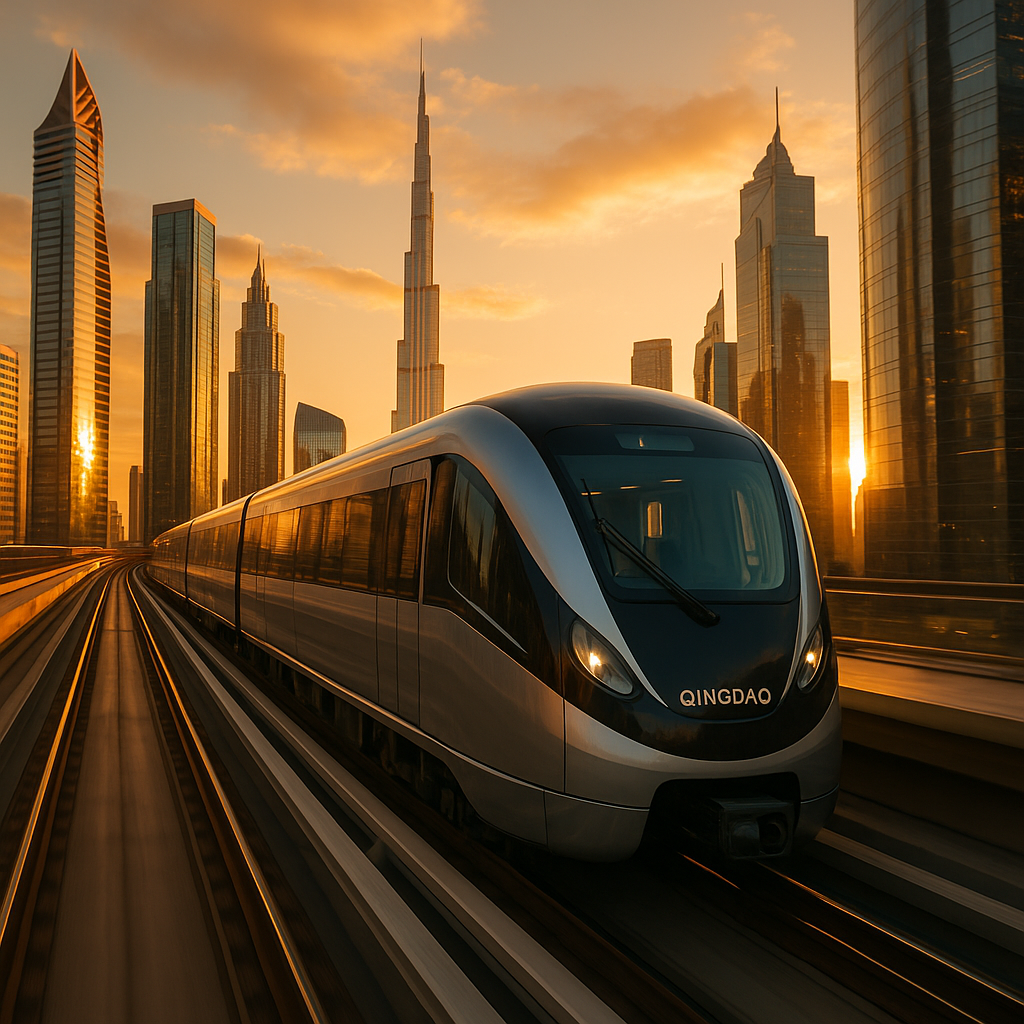
A feature report produced by iQingdao in July 2026 has turned attention to a striking symbol of industrial cooperation: rail technology made in Qingdao and used in the United Arab Emirates’ modern transport network. Framed under the theme of China’s rail power, the report highlights how a manufacturing center on China’s eastern coast is linked to one of the Gulf’s most visible modernization drives.
The story resonates beyond simple export success. The UAE has spent years building a reputation for advanced infrastructure, efficient urban mobility and future-oriented city planning. In that context, the use of rail equipment and technology associated with Qingdao reflects a broader global trend in which Chinese industrial cities are supplying not only goods, but complex transport systems, engineering expertise and long-term technical support.
From Coastal Manufacturing Hub to Global Rail Supplier
Qingdao has long been known as a major port city and manufacturing base, but in recent decades it has also become closely associated with high-end rail transit production. China’s wider rail industry grew rapidly alongside the country’s urbanization and massive investment in metro systems, high-speed rail and export-oriented engineering. That domestic expansion gave Chinese firms practical experience in designing, building and maintaining large-scale rail networks under varied operating conditions.
As Chinese rail technology matured, overseas markets became an increasingly important arena. Cities and countries seeking to expand public transport, reduce congestion and improve connectivity began looking to suppliers able to deliver rolling stock and systems at competitive cost and scale. Qingdao, with its industrial capabilities and role in rail manufacturing, became part of that outward push.
Why the UAE Connection Matters
The UAE is an especially significant partner because transport infrastructure there is about more than mobility. Rail and metro systems support tourism, business travel, airport access and the functioning of fast-growing urban centers. They also fit into a broader strategy of diversifying the economy beyond hydrocarbons by investing in logistics, technology and livable cities.
For the UAE, reliable rail systems help address familiar metropolitan pressures: road congestion, environmental concerns and the need for smoother movement of residents and visitors. For China, cooperation in such projects showcases the ability of its manufacturing and engineering sectors to meet international standards in demanding environments, including heat, sand and intensive daily use.
The visibility of the partnership also matters. Transport systems are public-facing infrastructure. Unlike components hidden deep within supply chains, trains and transit networks are used and seen every day. That gives projects like these symbolic weight, demonstrating how industrial cooperation can become part of everyday urban life.
A Broader Story of Infrastructure Diplomacy
The significance of Qingdao-made rail technology in the UAE also lies in what it says about the changing map of global infrastructure. For much of the modern era, rail systems in developing and emerging markets were often associated with European, Japanese or North American suppliers. China’s rise has reshaped that landscape. It is now a major player in the export of transit equipment, construction capability and rail-related services.
That shift has implications for both regions. In the Middle East, governments are investing heavily in smart cities, cleaner transport and integrated logistics corridors. In China, manufacturers are looking outward as international cooperation becomes a key avenue for industrial growth. Projects connecting the two therefore sit at the intersection of trade, technology and geopolitical influence.
Why Readers Should Pay Attention
For readers, this is not just a story about trains. It is a story about how cities are built, how international partnerships work in practice and how manufacturing strength can shape global development. Public transport infrastructure influences commute times, air quality, property development and the competitiveness of major business hubs. When one city’s factories help another country modernize its transport network, the effects are tangible and long-lasting.
The iQingdao feature underscores that point by placing a local Chinese industrial success story within a global frame. Qingdao’s rail technology supporting the UAE’s transport development is, in essence, a snapshot of a larger era: one in which infrastructure has become a central language of international cooperation, and in which the machinery of urban life increasingly carries a cross-border signature.