

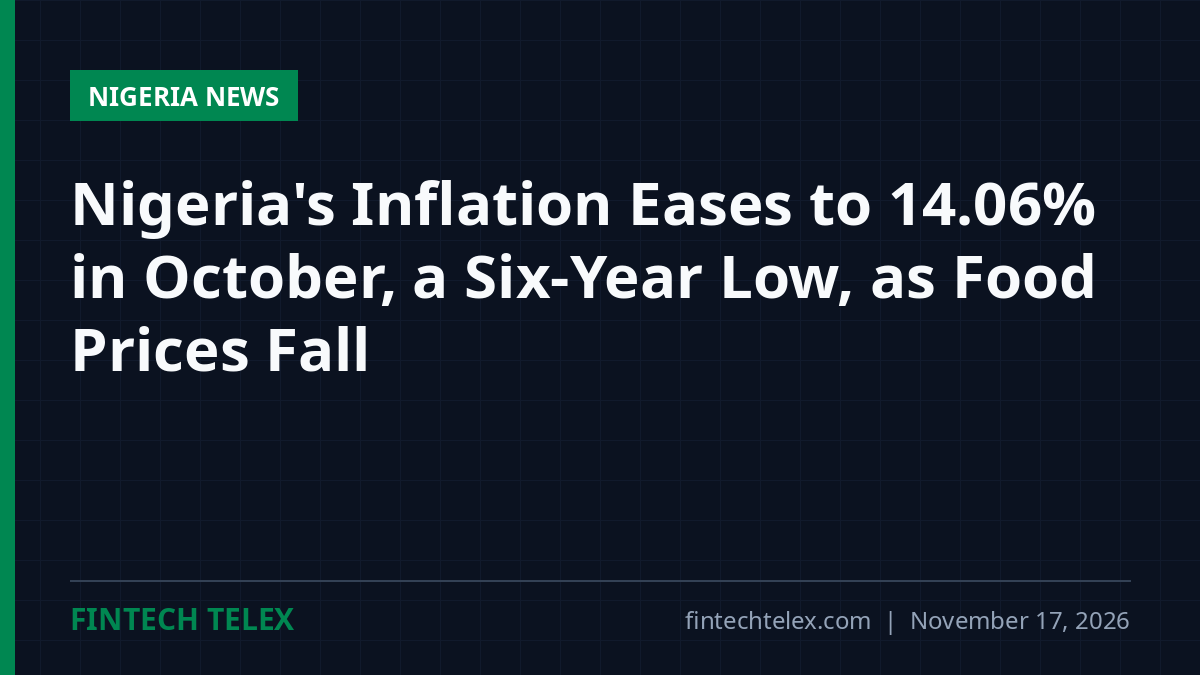
ABUJA — Nigeria’s headline inflation rate slowed to 14.06% in October from 14.63% in September, the National Bureau of Statistics (NBS) said on Monday, November 16, offering some relief to households ahead of the January 2027 general election.
The figure is a six-year low and strengthens the case for an interest rate cut at the Central Bank of Nigeria’s final policy meeting of the year next week, BusinessDay reported. Inflation stood at 18.97% in October 2025, according to Vanguard.
Food prices fall again
Food inflation eased to 19.13% year on year from 19.59%, and food prices fell 0.75% from September, a smaller drop than September’s 1.55% decline, according to an analysis by FMDA. The NBS attributed the change to prices of vegetable oil, sardines, green peas, frozen mackerel, croakers, local rice, catfish, beef tripe, palm oil and millet flour.
Core inflation, which excludes volatile farm produce and energy, fell sharply to 10.78% from 12.95%, helped by a high base from October 2025. The 12-month average rate dropped to 15.40% from 15.80%.
But monthly prices rose faster
On a month-on-month basis, headline inflation rose to 0.43% in October from 0.06% in September. FMDA said a 1.74% rise in the energy index and a 1.86% rise in transport costs outweighed cheaper food. The Consumer Price Index rose to 147.0 points from 146.4, Blueprint reported, under the rebased series that uses 2024 as its base year.
By the numbers
- Headline inflation: 14.06%, down 0.57 percentage points from September and 4.91 points from October 2025
- Food inflation: 19.13% year on year; food prices down 0.75% month on month
- Core inflation: 10.78%, down from 12.95%
- Month-on-month headline: 0.43%, up from 0.06%
- 12-month average: 15.40%
October was the fifth straight month of slowing annual inflation, MoneyCentral reported. Statistician-General Prince Adeyemi Adeniran said the report uses a new CPI base year of 2024, with 2023 as the weight reference period.
That means the cost of living is still rising, just more slowly. Many Nigerians continue to feel the squeeze from high transport fares and fuel costs, even as annual figures improve, Technext noted. Dangote Petroleum Refinery cut its petrol gantry price by ₦51 to ₦1,159 a litre on Monday, Daily Post reported, a move that could ease energy costs if it reaches the pump.
What it means for interest rates
The Monetary Policy Committee cut the benchmark rate by 350 basis points to 23% in September. With inflation now well below the policy rate, some analysts see room for another cut. Others expect caution because of naira volatility and the risk of a US rate hike in December, as Fintech Telex reports in today’s Finance section.
The naira weakened to ₦1,357.19 per dollar at the official market on November 16, Legit.ng reported, a reminder that currency moves remain a key risk for import prices and the inflation outlook.
For savers, Nigeria’s real interest rates remain strongly positive. For borrowers and small businesses, a further cut would lower loan costs heading into 2027.
This article is for information only and is not investment advice.