

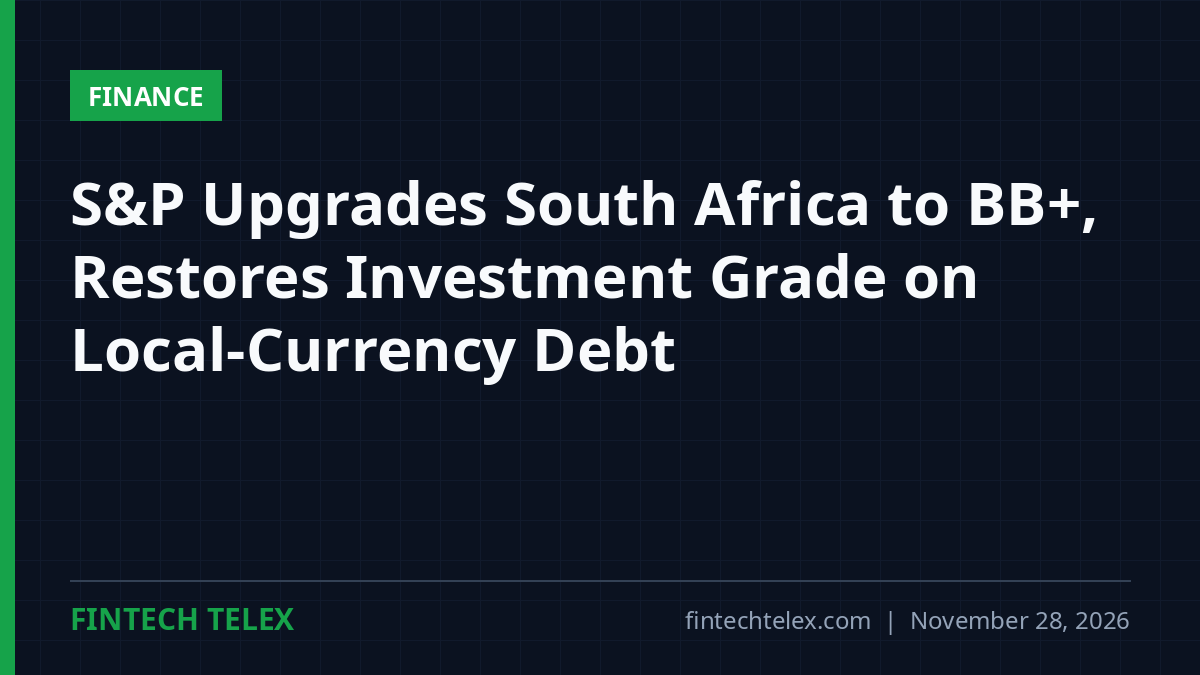
JOHANNESBURG — South Africa has moved a step closer to regaining full investment-grade status after S&P Global Ratings upgraded its sovereign credit ratings late on Friday, 27 November.
S&P raised South Africa’s long-term foreign-currency rating to BB+ from BB, citing an improving fiscal trajectory, with the government on track for its fourth annual primary surplus, Reuters reported. The agency also lifted the long-term local-currency rating to BBB-, which is investment grade, raised the short-term local-currency rating to A-3 from B, and set a stable outlook, according to Sunday World.
Why S&P moved
“Fiscal consolidation has, and will continue, despite the conflict in the Middle East having affected real GDP growth in 2026,” S&P said in its statement, quoted by Reuters.
A primary surplus means revenue exceeds spending before interest payments. South Africa’s National Treasury said earlier this month that debt-to-GDP peaked at 74.6% in the 2025/26 fiscal year, below the 78.4% it had estimated in its mid-term budget review, Reuters reported.
S&P projects real GDP growth of 1.3% in 2026, supported over the following years by reforms in electricity and other sectors. It said the stable outlook balances continued fiscal improvement and declining government debt against risks from higher energy costs linked to the Middle East conflict.
Treasury’s response
National Treasury welcomed the decision. Director-General Duncan Pieterse said the country was on course to regain investment-grade status for the first time in more than a decade. “The two upgrades from S&P in just over a year testify to the progress the government has made in restoring South Africa’s public finances to health,” he said, according to Sunday World.
Treasury said South Africa now holds the second-highest S&P foreign-currency rating among sub-Saharan African sovereigns, and argued that better ratings would lower borrowing costs for government, businesses and households.
The move follows an upgrade from Fitch earlier this year, its first for South Africa in nearly 21 years. Moody’s still rates the country below investment grade but revised its outlook to positive in May.
What it means for African readers
The difference between BB+ and BBB- on the foreign-currency scale is one notch, but it matters. Many pension funds and index trackers can only hold investment-grade debt. A full return to that category on all major agencies would widen the pool of buyers for South African bonds and could cut the government’s interest bill.
For the rest of the continent, South Africa’s path is a case study. It shows that rating agencies reward several years of primary surpluses and credible debt targets, even when growth is modest. Nigeria, Kenya, Ghana and Egypt, all of which have been through rating reviews in the past two years, face the same test: show the numbers, then wait.
For investors in rand assets, the upgrade had been partly expected after S&P’s positive outlook. How the bond market prices the move when trading resumes on Monday will show how much was already in the price.
Fintech Telex will follow the market reaction and Moody’s next review.
This article is for information only and is not investment advice.