


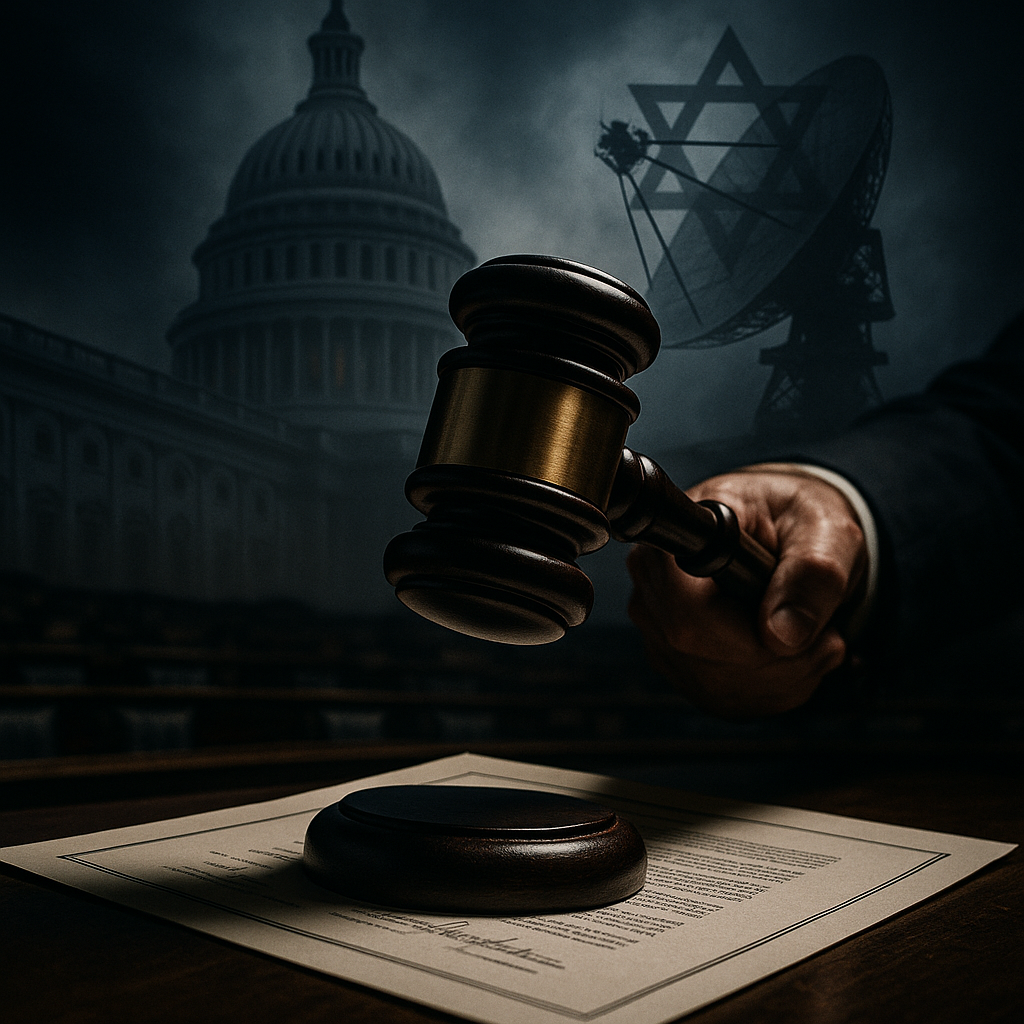
The US House of Representatives has narrowly passed a sweeping $1.15 trillion defence spending bill that would raise military funding and deepen military technology cooperation with Israel, marking another major step in Washington’s annual debate over national security priorities. The legislation, the 2027 National Defence Authorisation Act, still faces further scrutiny as it moves through the legislative process, but the House vote signals continued bipartisan willingness to maintain a large Pentagon budget even amid sharp political divisions on other issues.
The bill’s passage is significant not only because of its size, but because defence authorisation measures often serve as a broader statement of US strategic priorities. In this case, lawmakers are backing continued investment in American military readiness while also reinforcing a long-standing security partnership with Israel at a moment when the Middle East remains volatile and global competition with rival powers continues to shape US policy.
Why the NDAA matters every year
The National Defence Authorisation Act is one of the most closely watched pieces of legislation in Washington because it sets policy direction for the Department of Defense and authorises spending levels for military programmes. Congress has passed some version of the NDAA annually for decades, making it one of the few must-pass bills that reliably moves through both chambers. While the measure does not itself provide all final funding, it lays out what lawmakers want the Pentagon to prioritise, from weapons procurement and troop support to research, deterrence and international defence cooperation.
Because of that role, the annual bill frequently becomes a vehicle for larger strategic messaging. A vote on the NDAA is not just about numbers on a ledger; it is also about how the United States sees its place in the world, what threats it considers most urgent and which allies it intends to support most visibly.
Expanded Israel cooperation in a wider strategic context
The provision expanding military technology cooperation with Israel reflects a relationship that has long been central to US policy in the Middle East. For decades, Washington has viewed Israel as a critical security partner, and cooperation has included missile defence, intelligence sharing, joint research and advanced defence systems. Congressional support for those ties has historically remained strong even when US politics has become more polarised.
Expanding technology cooperation could have practical implications for defence innovation, missile interception capabilities and battlefield systems development. It also carries symbolic weight. At a time of regional instability, closer military coordination can be read by allies and adversaries alike as a reaffirmation of US commitment to Israel’s security. At the same time, such moves are likely to be watched closely by governments across the Middle East, where perceptions of American involvement can shape diplomacy, security calculations and domestic political reactions.
What the vote says about US priorities
The narrow House approval suggests that while support for a robust military remains deeply embedded in Congress, there is growing debate over how that money should be spent and what strategic goals it should serve. Defence bills increasingly sit at the intersection of several major issues: competition with China, support for allies in Europe and the Middle East, weapons modernisation, cyber threats and pressure to control federal spending.
For ordinary readers, the story matters because defence policy reaches far beyond the military itself. Pentagon budgets influence industrial jobs, regional economies, research spending and foreign policy decisions that can affect global markets and energy stability. A bill of this scale can also shape debates over federal priorities, particularly when voters are weighing military spending against domestic needs such as infrastructure, healthcare and education.
What comes next
The House vote is only one stage in a longer process. The Senate will weigh its own approach, and any differences between the two chambers must eventually be resolved before final legislation can be sent forward. That means the measure could still change, including provisions related to spending levels or international cooperation.
Still, the House’s action underscores a familiar reality in American politics: even in an era of partisan gridlock, defence remains one of the areas where Congress is most consistently prepared to act. By pairing a vast military budget with expanded cooperation with Israel, lawmakers are signalling that hard power, alliance management and technological advantage remain at the centre of US national security strategy.