

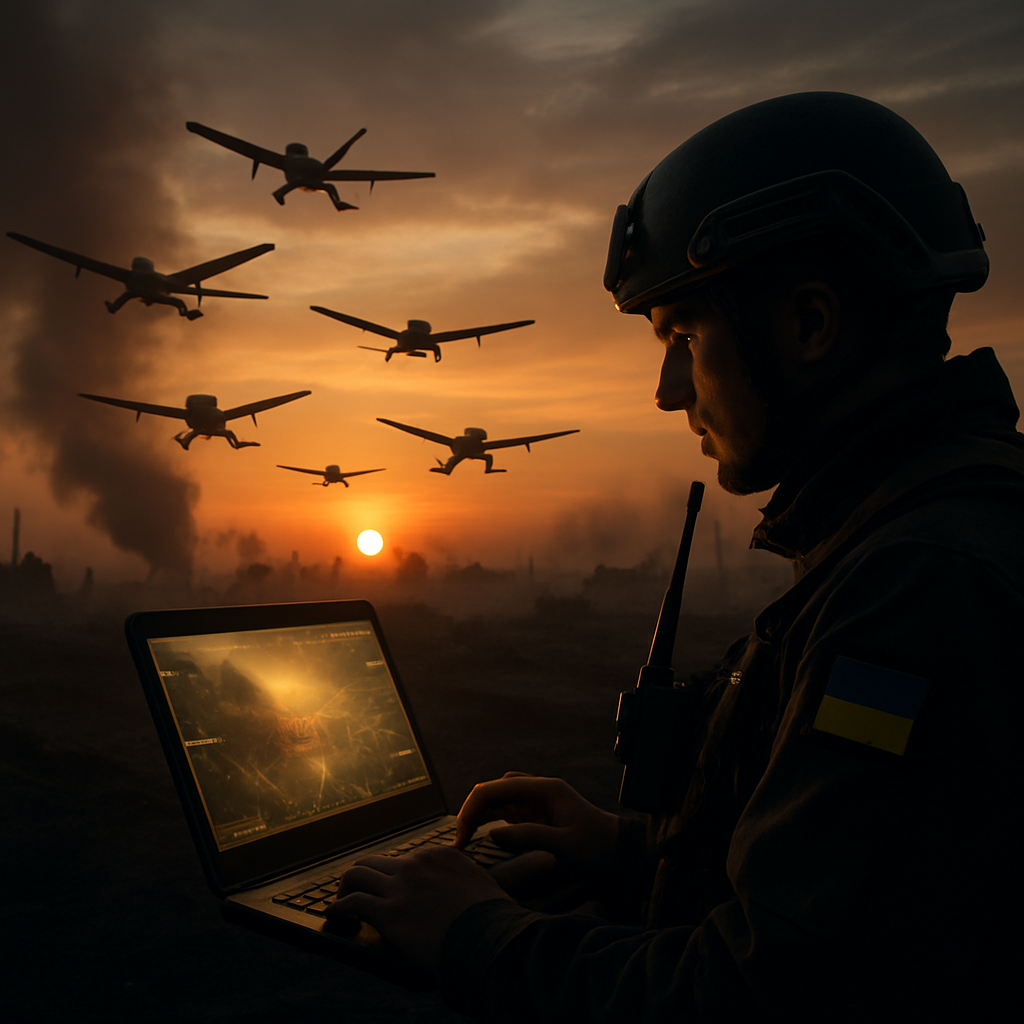
Ukrainian President Volodymyr Zelenskyy says the balance of initiative in the war with Russia has shifted, arguing that Moscow is no longer dictating the pace of the conflict as it once did. In an interview with Fox News, Zelenskyy said Russian President Vladimir Putin has lost the initiative, pointing to the growing role of Ukrainian drones and other military technologies that have altered the battlefield dynamic. Zelenskyy also used the moment to honor U.S. Sen. Lindsey Graham, underscoring the political and symbolic importance of continued American support for Kyiv.
The remarks reflect a broader message Ukraine has tried to send to allies and adversaries alike: despite the war’s grinding attrition and Russia’s larger reserves, Ukraine believes innovation can offset some of Moscow’s traditional advantages in manpower, artillery and industrial scale. Over the past two years, drones have become one of the defining features of the war, used for reconnaissance, targeting, strike missions and the disruption of supply lines. That transformation has changed not only how battles are fought, but also how both sides think about defense production, logistics and strategy.
How the War Reached This Point
Russia’s full-scale invasion of Ukraine in 2022 began with expectations in Moscow of a rapid victory, but Ukrainian resistance, Western military aid and Russian operational failures quickly reshaped those assumptions. The war then evolved into a long and costly struggle marked by missile attacks, trench warfare, territorial offensives and counteroffensives, and repeated attempts by both sides to wear the other down. Throughout that period, Ukraine has sought ways to compensate for Russia’s greater stockpiles by relying on flexibility, precision and increasingly sophisticated domestic defense production.
One of the clearest examples has been the rapid expansion of drone warfare. Cheap compared with many conventional weapons and adaptable to changing conditions, drones have allowed Ukraine to strike targets far from the front, monitor Russian positions and complicate military planning. Russia has also leaned heavily on drones, turning the conflict into a testing ground for modern unmanned warfare on a scale not seen in earlier European conflicts. Zelenskyy’s claim that Putin has lost the initiative is rooted in that technological contest, where speed of adaptation can matter almost as much as troop numbers.
Why Zelenskyy’s Message Matters
Zelenskyy’s comments are as much strategic communication as battlefield assessment. Ukraine’s leadership has long needed to reassure its population that the country can endure a prolonged war while also persuading foreign partners that their support remains meaningful. In Washington and across Europe, debates over military assistance, defense budgets and long-term commitments to Ukraine have grown more politically charged as the war drags on. By emphasizing momentum and innovation, Zelenskyy is making the case that aid to Ukraine is not simply sustaining resistance, but helping shape a battlefield where Russia can be challenged.
His decision to honor Graham also highlights the enduring importance of U.S. political backing. American assistance has been central to Ukraine’s ability to defend itself, and gestures toward prominent U.S. supporters carry significance beyond symbolism. They serve as reminders that the war is not only a regional military contest, but also a geopolitical struggle with implications for NATO, European security and the credibility of Western commitments.
Global Implications of a Shift in Initiative
If Ukraine is indeed gaining tactical or operational momentum in certain areas, the implications could reach far beyond the front lines. A more capable Ukrainian military can force Russia to divert resources, rethink offensive plans and invest even more heavily in domestic arms production. It may also influence how other countries prepare for future wars, particularly the use of low-cost autonomous or semi-autonomous systems to counter larger conventional forces.
For readers outside the region, the story matters because the war has already affected energy markets, food supply chains, defense spending and the broader international order. Any sign that battlefield dynamics are changing can influence diplomatic calculations, sanctions policy and the willingness of governments to continue costly support packages. Zelenskyy’s argument is therefore about more than morale. It is an attempt to define the narrative of a war that remains deeply uncertain, but increasingly shaped by technology, endurance and the political will of Ukraine’s allies.