

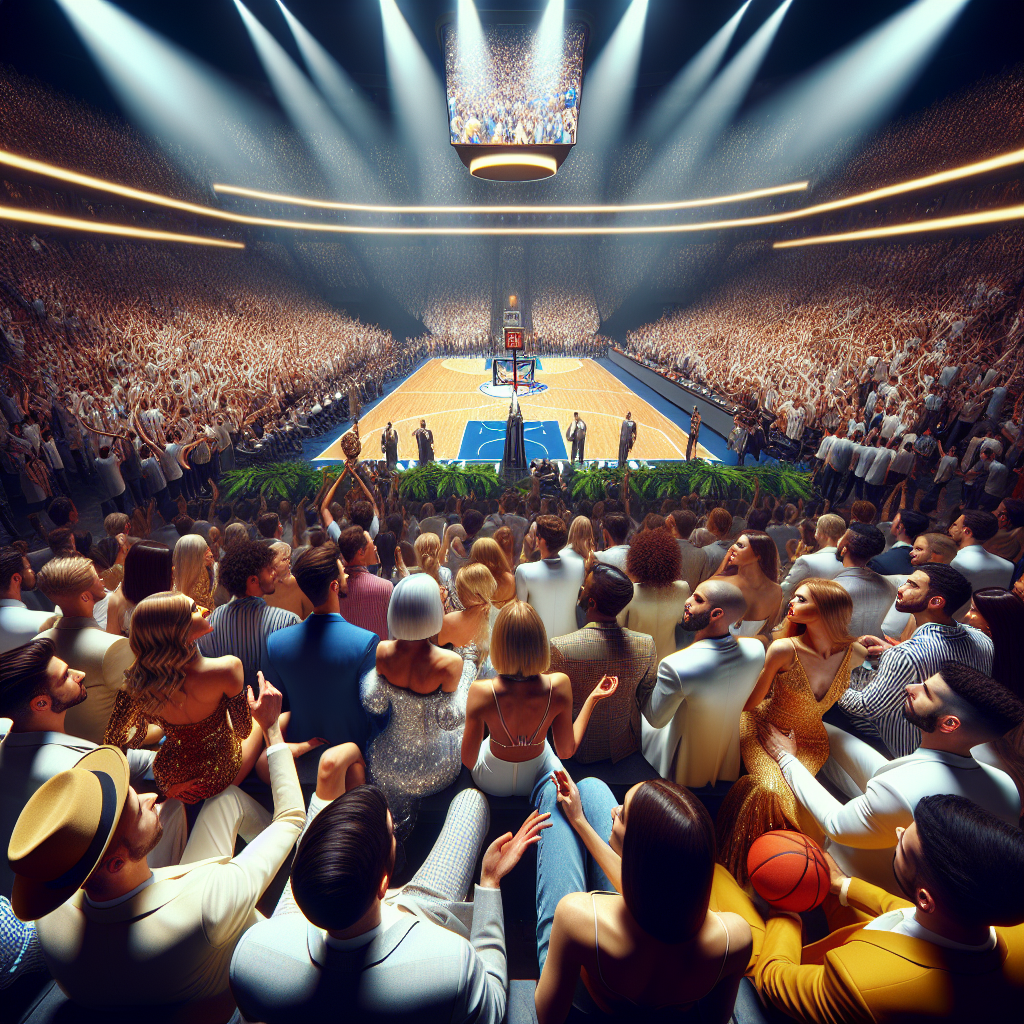
Playoff basketball in Los Angeles rarely unfolds as a purely sporting event, and Saturday’s Game 1 between the Lakers and Rockets at Crypto.com Arena was another reminder of that reality. While the action on the court carried the weight and urgency expected of the NBA postseason, much of the attention in the building also drifted toward the courtside seats, where a lineup of celebrities helped turn the arena into a showcase of entertainment, fashion and cultural influence.
Among those spotted at the game were Travis Scott, Timothy Olyphant and former Lakers forward Lamar Odom, with the star presence underscoring a familiar truth about the franchise: when the Lakers are in the playoffs, the crowd itself becomes part of the story. In Los Angeles, basketball is not just a competition. It is a civic ritual, a social event and, at times, a red-carpet spectacle staged under arena lights.
A Longstanding Lakers Tradition
The connection between the Lakers and celebrity culture stretches back decades. From the Showtime era, when courtside became one of the most visible seats in American sports, to the Kobe Bryant years and into the current generation, the team has held a singular place at the intersection of athletics and entertainment. Few franchises in any league are as closely linked with the identity of their city. In Los Angeles, where film, music and sports industries overlap daily, a major Lakers playoff game naturally attracts famous faces.
That tradition has only grown stronger in the modern media era. Social media, celebrity photography and round-the-clock sports coverage ensure that the audience inside the arena matters almost as much as the one watching from home. Expanded postseason seating near the floor adds another layer to that visual theater, placing notable figures in clear view for television cameras and online discussion. The result is a playoff atmosphere that feels distinctively Los Angeles.
Why the Celebrity Presence Matters
At one level, celebrity attendance is a sideshow. Fans tune in for the stakes of the series, the tactical adjustments and the star performances on the hardwood. But the visibility of musicians, actors and former athletes at games also speaks to the Lakers’ unusual cultural reach. The franchise remains one of the NBA’s most recognizable brands globally, and scenes from a packed playoff arena help reinforce that image far beyond Southern California.
That matters to the league as well. The NBA has long embraced the fusion of sports and popular culture, and Los Angeles often serves as its clearest example. Images of famous fans in attendance circulate quickly, giving playoff games an added layer of relevance among audiences who may not follow basketball closely but do follow celebrities, fashion or entertainment news. In that sense, a star-filled arena becomes part of the NBA’s broader appeal and international visibility.
Local Energy, Global Attention
For Los Angeles, the atmosphere around a Lakers playoff game can ripple well beyond the arena itself. High-profile matchups draw attention to downtown businesses, boost the visibility of the city’s event scene and contribute to the sense that major games are communal occasions. Restaurants, bars and nearby hospitality venues often benefit from the heightened traffic and excitement surrounding postseason nights.
Globally, the Lakers occupy a rare position as both a basketball team and a lifestyle symbol. When celebrities fill the building, that image is amplified for international audiences who already associate the franchise with glamour and star power. For fans abroad, these moments reinforce the idea that a Lakers playoff game is more than a sporting contest; it is an entertainment event with worldwide resonance.
The Appeal Beyond the Box Score
Stories like this matter because they capture something broader than the outcome of one game. They show how modern sports function as a meeting point for industries, identities and audiences. The Lakers, perhaps more than any other NBA team, embody that overlap. A playoff crowd featuring artists, actors and former players is not simply a collection of recognizable names. It is evidence of the team’s enduring place in the cultural fabric of Los Angeles and the league’s wider ecosystem.
Ultimately, the celebrities at Crypto.com Arena were not the main event, but they helped define the atmosphere of it. In a city where image and performance are deeply entwined, the Lakers remain one of the few institutions capable of bringing all corners of that world together in one room. On playoff night, that fusion is not incidental. It is part of what makes the occasion feel unmistakably big.