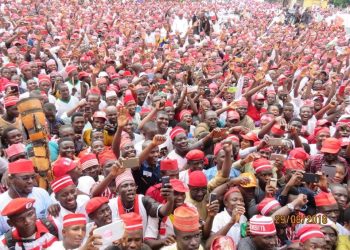



Prime Minister Datuk Seri Anwar Ibrahim has challenged those accusing him of keeping “billions of ringgit” in Africa to back up their allegations with proof, dismissing the claim as something that does not merit a response in the absence of evidence. Speaking in Johor Baru, Anwar said there was no need to entertain such assertions unless those making them could substantiate what they were saying.
The remark is the latest example of how financial allegations, whether documented or speculative, continue to shadow political discourse in Malaysia. In a country where public trust in institutions has repeatedly been tested by major corruption scandals and prolonged partisan rivalry, accusations involving secret fortunes and overseas assets can quickly gain traction, even when no evidence is presented publicly.
Why the allegation matters
Claims of hidden wealth are never politically neutral, particularly when they involve a sitting prime minister. For ordinary Malaysians, such allegations touch on deeper concerns about integrity in public office, the use of power, and whether national leaders are transparent about their finances. Even when unproven, sensational accusations can shape public opinion, dominate online discussion, and further harden partisan divides.
Anwar’s response appears aimed at drawing a clear line between legitimate scrutiny and politically charged hearsay. By calling for proof rather than engaging point by point with the allegation, he is effectively shifting the burden back onto his accusers. That approach also reflects a broader principle in democratic politics: serious claims, especially those involving corruption or illicit wealth, require verifiable evidence if they are to be treated credibly.
Malaysia’s political backdrop
The sensitivity surrounding such claims is rooted in Malaysia’s recent political history. Over the years, the country has seen corruption allegations become central to elections, party fractures and public debate. Financial misconduct cases involving prominent figures have left a lasting impression on voters and made asset-related accusations especially potent. As a result, any suggestion that a national leader may have concealed wealth abroad can resonate strongly, regardless of whether it is proven.
Anwar himself is no stranger to politically intense battles. His long career has included periods in government, opposition leadership, imprisonment, and eventually his rise to the premiership after years as one of the country’s most prominent reformist voices. That history means allegations against him are often viewed through multiple lenses: by supporters as attempts to damage a reform agenda, and by critics as part of the rough-and-tumble accountability expected in public life.
Domestic and international implications
At the domestic level, repeated unverified claims can have a corrosive effect on governance. They may distract leaders from policy issues such as inflation, investment, wages and public services, while also muddying the line between evidence-based accountability and political mudslinging. For a government trying to project stability, economic competence and reform, persistent rumours about hidden assets can become a reputational burden.
Internationally, references to money allegedly stored in foreign regions such as Africa can also carry diplomatic and financial implications. In an era of heightened scrutiny over cross-border financial flows, offshore holdings and anti-money laundering rules, even unsubstantiated claims can invite unwanted attention. Foreign investors and international observers tend to watch political stability and governance standards closely, particularly in emerging economies seeking to strengthen confidence and attract capital.
A test of public discourse
This episode also highlights a larger challenge in the digital age: the speed with which allegations can circulate compared with the slower process of verification. Political rumours often spread rapidly through speeches, social media posts and messaging platforms, reaching large audiences before facts are established. That puts pressure not only on politicians to respond, but also on the public to distinguish between accusation and evidence.
For readers, the significance of this story lies not just in the allegation itself but in what it says about Malaysia’s political environment. The prime minister’s challenge is, in essence, a call for standards of proof in a climate where claims can easily become viral talking points. Whether one supports or opposes the government, the underlying issue is the same: public accountability is strongest when it is grounded in facts, documents and credible investigation rather than innuendo.
Until evidence is produced, the accusation remains just that — an allegation. But Anwar’s response ensures the issue will remain part of the broader conversation about political trust, leadership credibility and the quality of public debate in Malaysia.