
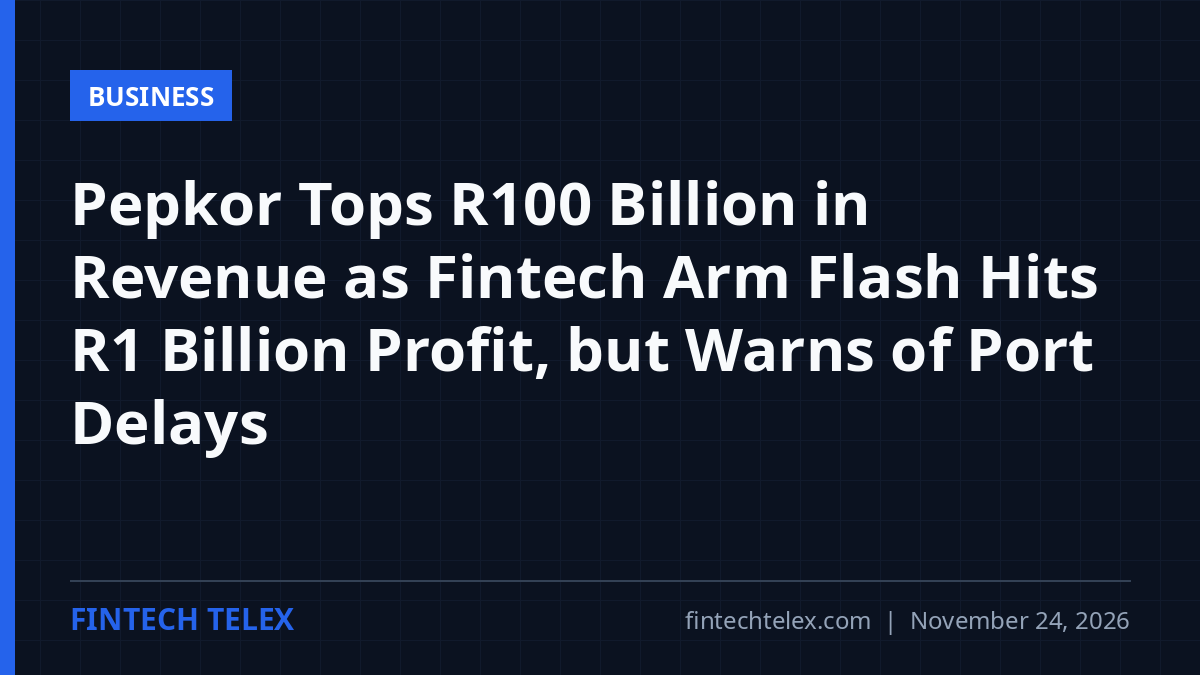
CAPE TOWN — Pepkor, the South African owner of PEP and Ackermans, said on Tuesday that annual revenue passed R100 billion for the first time. It also warned that port disruptions and late stock deliveries would weigh on trading in the busy festive season.
Revenue from continuing operations rose 11.9% to R105.9 billion ($6.09 billion) in the year to 30 September, and normalised headline earnings per share rose 9.7% to 177.5 cents, Reuters reported via CNBC Africa.
The key numbers
According to the company’s results announcement on the JSE:
- organic revenue growth of 7.3%, against a high base inflated last year by South Africans withdrawing from their retirement savings under the new two-pot system
- gross profit margin up 170 basis points to 41.5%
- operating profit up 7.4% to R11.9 billion
- headline earnings per share of 171.3 cents, up 6.9% (9.7% on a normalised basis)
- cash generated from operations up 40.6% to R15.3 billion, with free cash flow more than doubling to R4.8 billion
- a dividend of 57.9 cents a share, up 9.3%, payable on 18 January 2027
Pepkor said its discount model helped it gain more than 200 basis points of market share in core categories despite high living costs and transport inflation.
Flash: the fintech inside the retailer
The standout was Flash, which supplies airtime, electricity, bill payments and other services through small informal shops. It is now reported as a separate segment called the Informal Market Platform.
- throughput up 17.6% to R70.6 billion
- revenue up 8.3% to R9.9 billion
- operating profit up 21.6% to R1.0 billion, the first time it has passed R1 billion
- 176,000 active merchant devices
Pepkor plans to merge Flash with Shop2Shop, a platform that helps informal traders buy stock and manage cash, to form a new company called FintechCo, with combined throughput potential of more than R200 billion. The deal, announced in July, is expected to complete in the second half of the 2027 financial year, subject to regulatory approval. Pepkor is also building a bank, PlusB, targeted for commercial launch in the same period.
The port problem
Pepkor said it had prioritised key product arrivals ahead of Black Friday and the festive season, but that delays would weigh on near-term trading. Moneyweb linked the warning to congestion at Durban, South Africa’s busiest container port.
What it means for African business
Pepkor’s results show how retailers serving low-income shoppers are turning into financial services companies. Flash’s growth comes from spaza shops and street traders, the businesses that formal banks have long struggled to reach. If the FintechCo merger goes through, one of Africa’s largest platforms for informal traders would sit inside a listed retailer.
The port warning is a reminder that logistics bottlenecks remain a cost for importers across Southern Africa, from shelves in Johannesburg to goods moving inland to Zimbabwe, Zambia and Botswana.
Investors will watch whether the festive-season slowdown Pepkor flagged shows up in its next trading update, and how quickly regulators sign off on the FintechCo merger and the PlusB banking launch.
This article is for information only and is not investment advice.